-
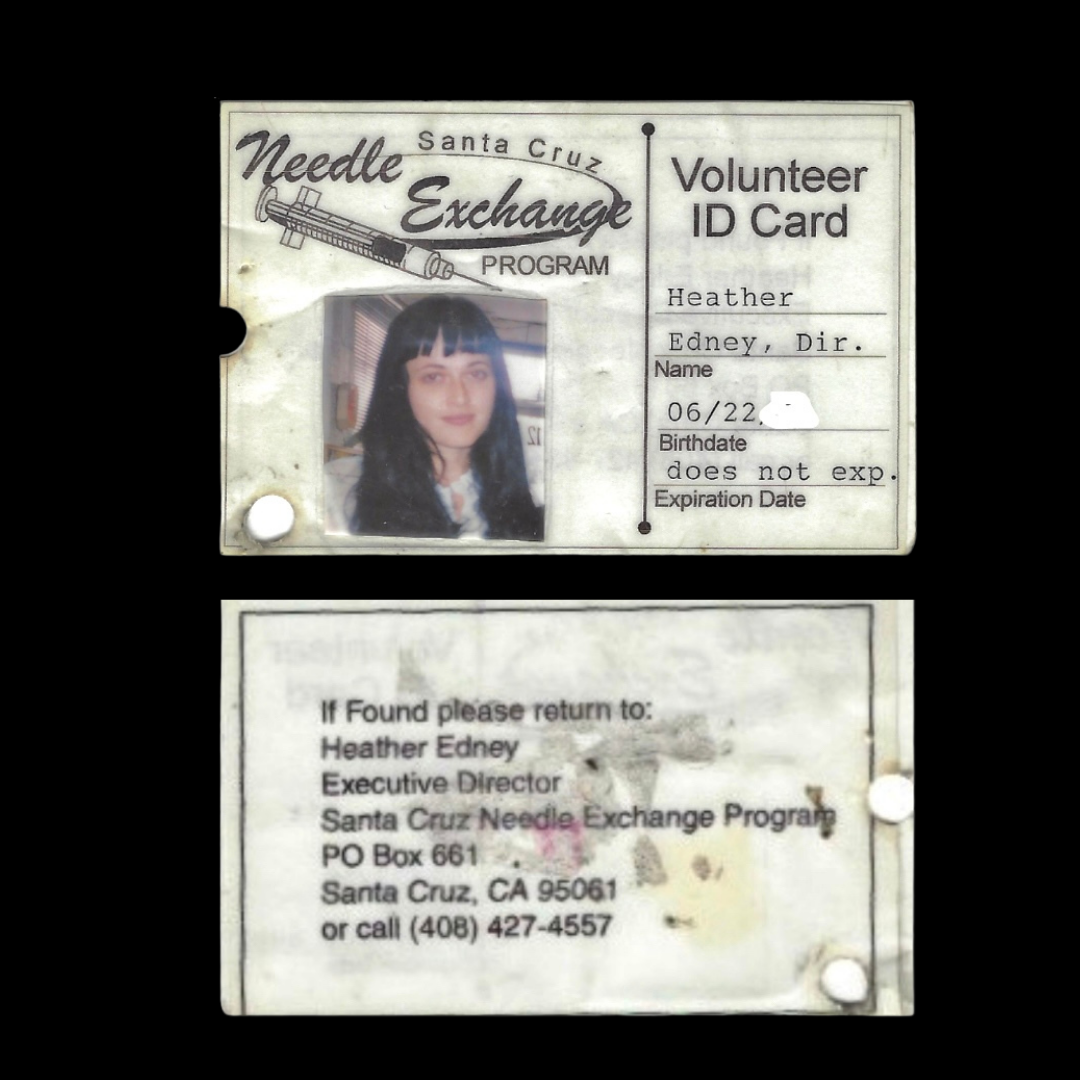
One of the seismic shifts from first generation AIDS risk reduction into the second decade was the influence of women and their role in introducing holistic healthcare services into the field. Out in the lead were Heather Edney and the women of Santa Cruz Needle Exchange Program.
Despite the lack of funding and illegal nature of syringe distribution, Heather Edney cofounded one of the earliest harm reduction programs in the United States. She and a dedicated team of volunteers engineered an innovative DIV organization from 1989-2003 that utilized punk aesthetics, Feminist & Queer theory, cutting edge harm reduction modalities as well as creating one of the first risk reduction models that included holistic healthcare practices.
For the first decade that SCNEP was in operation, Edney generated donations through her collaboration with local artists and musicians, creating an underground scene that attracted two communities most at risk for HIV-homeless youth and women trading sex for drugs.
-
Edney leveraged this legitimacy against the political forces that tried to shut SCNEP down. For the first 13 years of the program's existence, SCNEP was unique in that it was staffed by young female drug users who developed programs and educational materials that are foundational to the way harm reduction services are delivered today. They also pioneered the hiring and staffing of active drug users as a model that continues to be replicated.
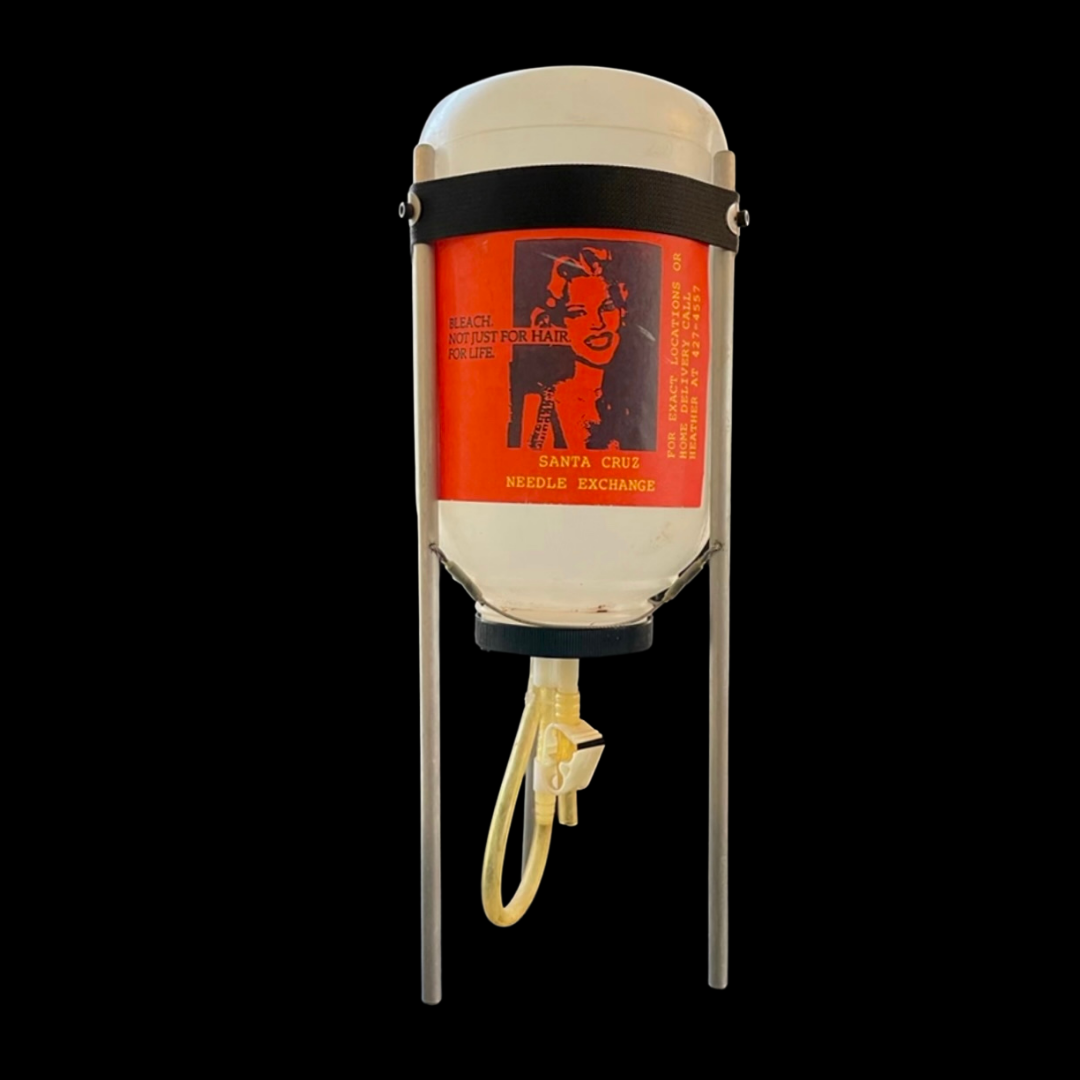
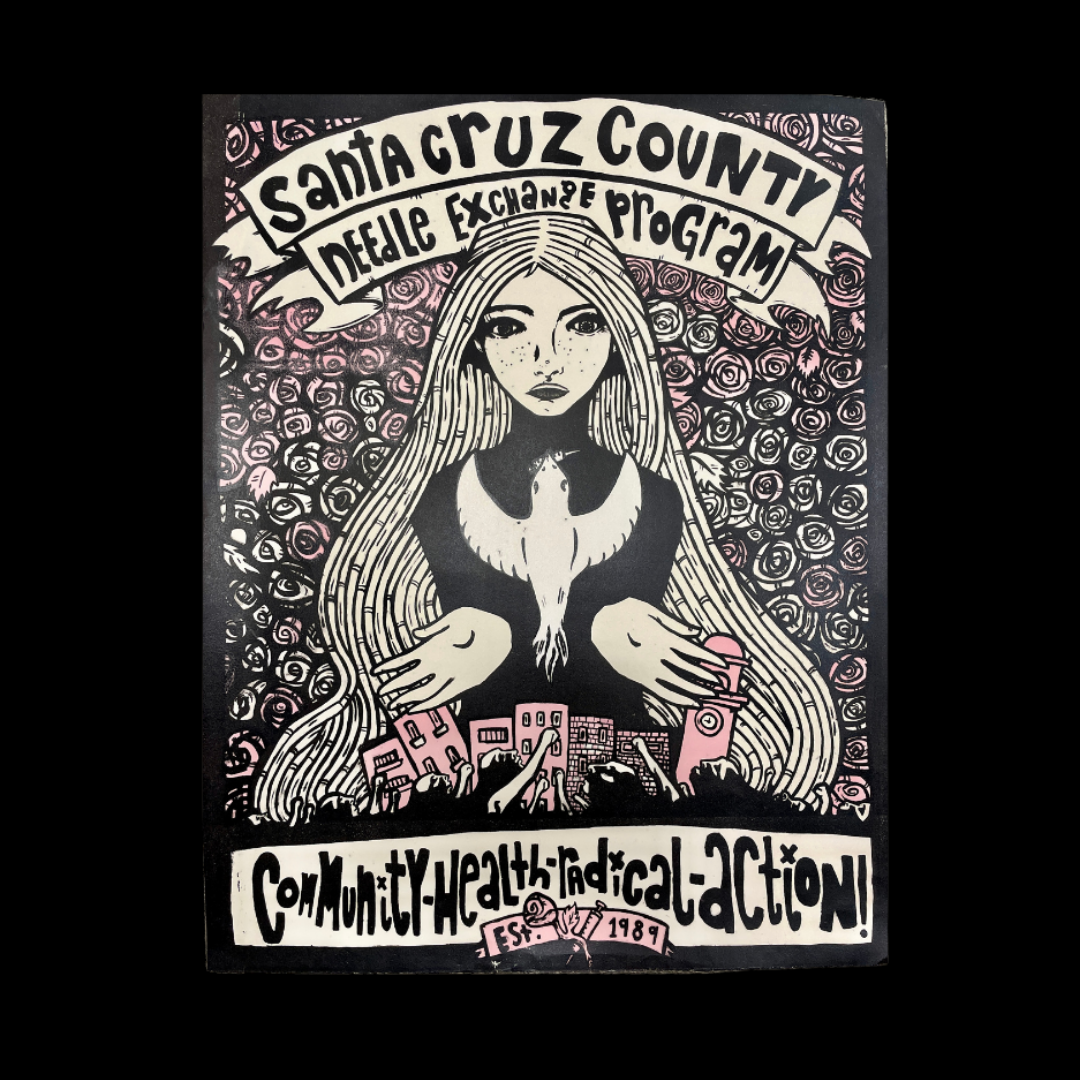
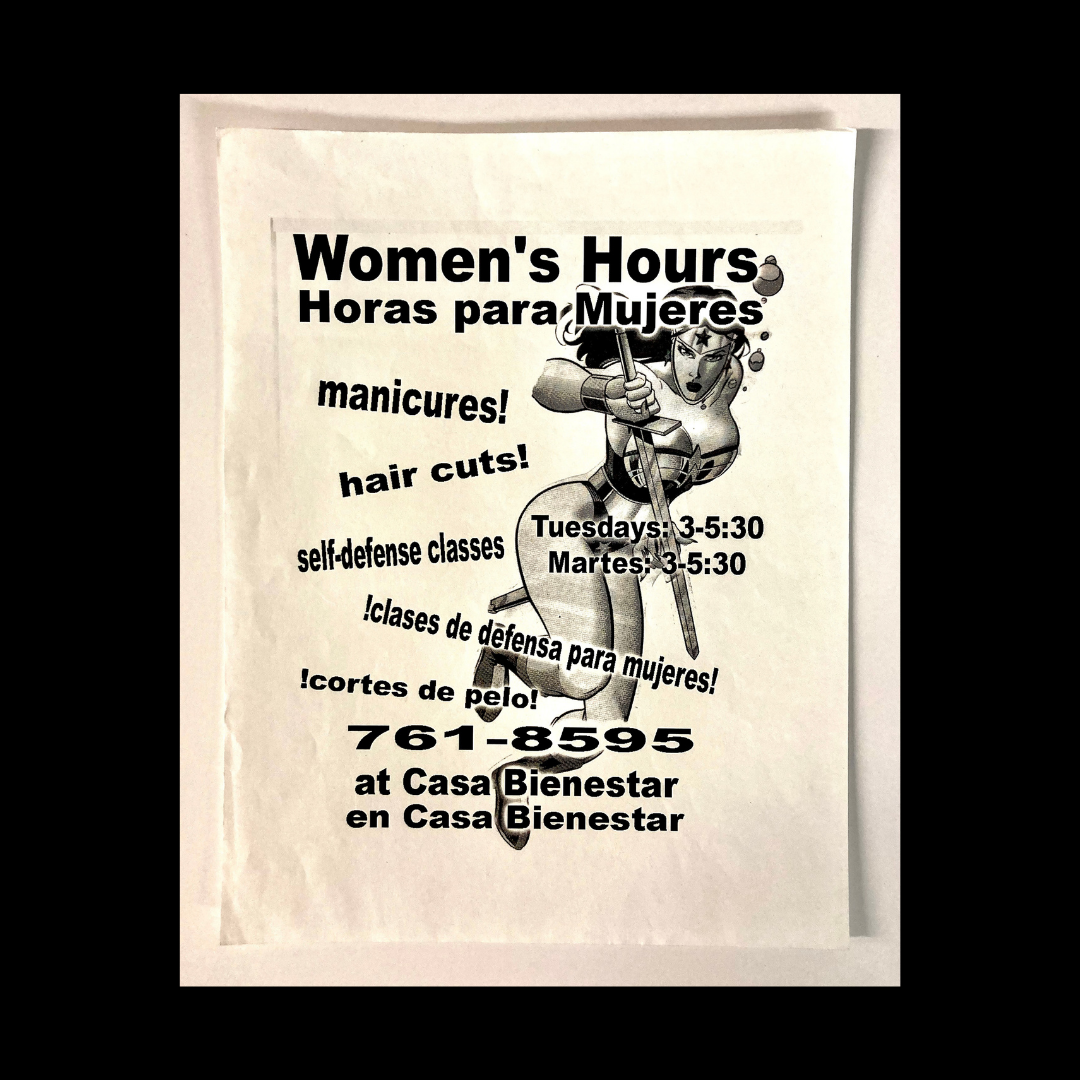
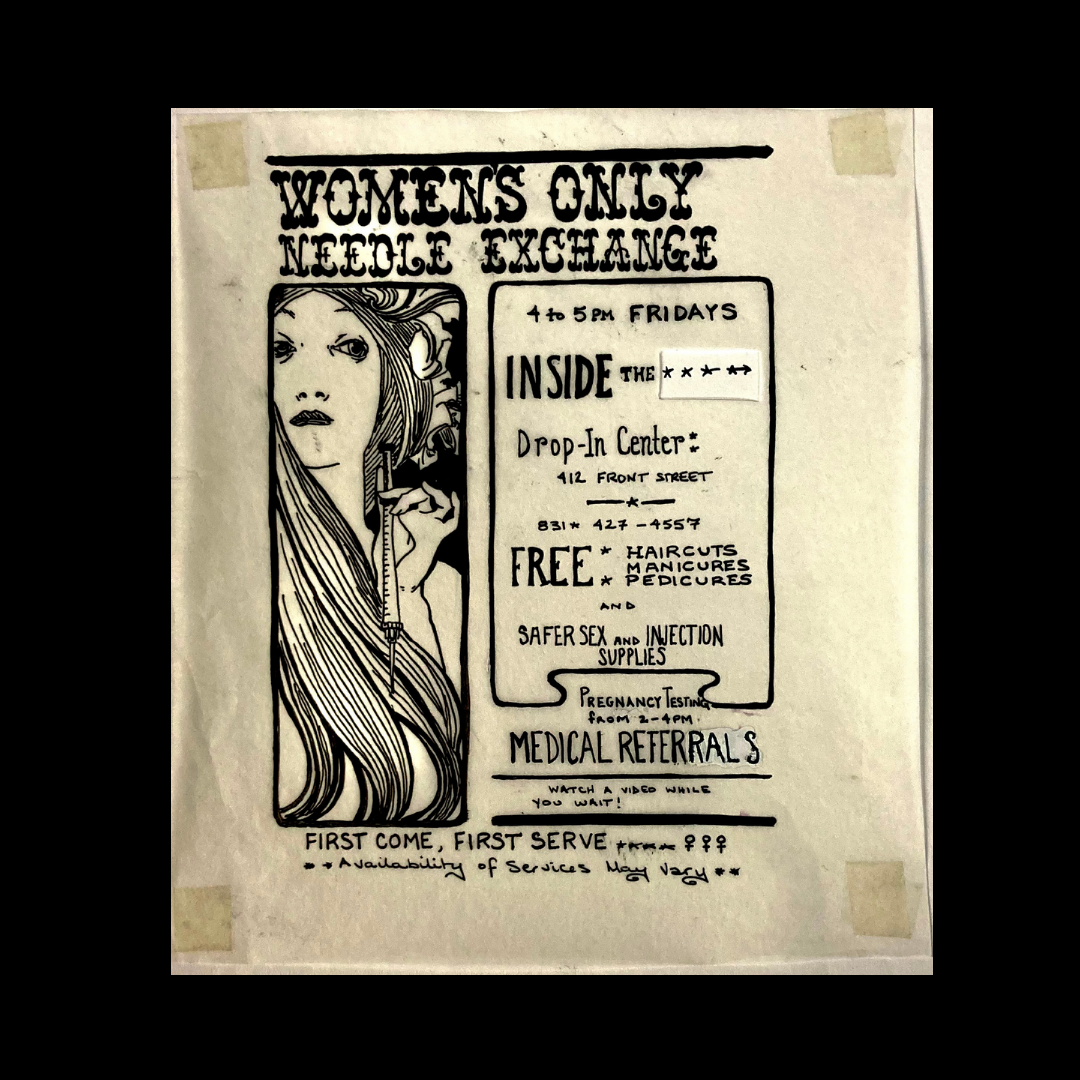
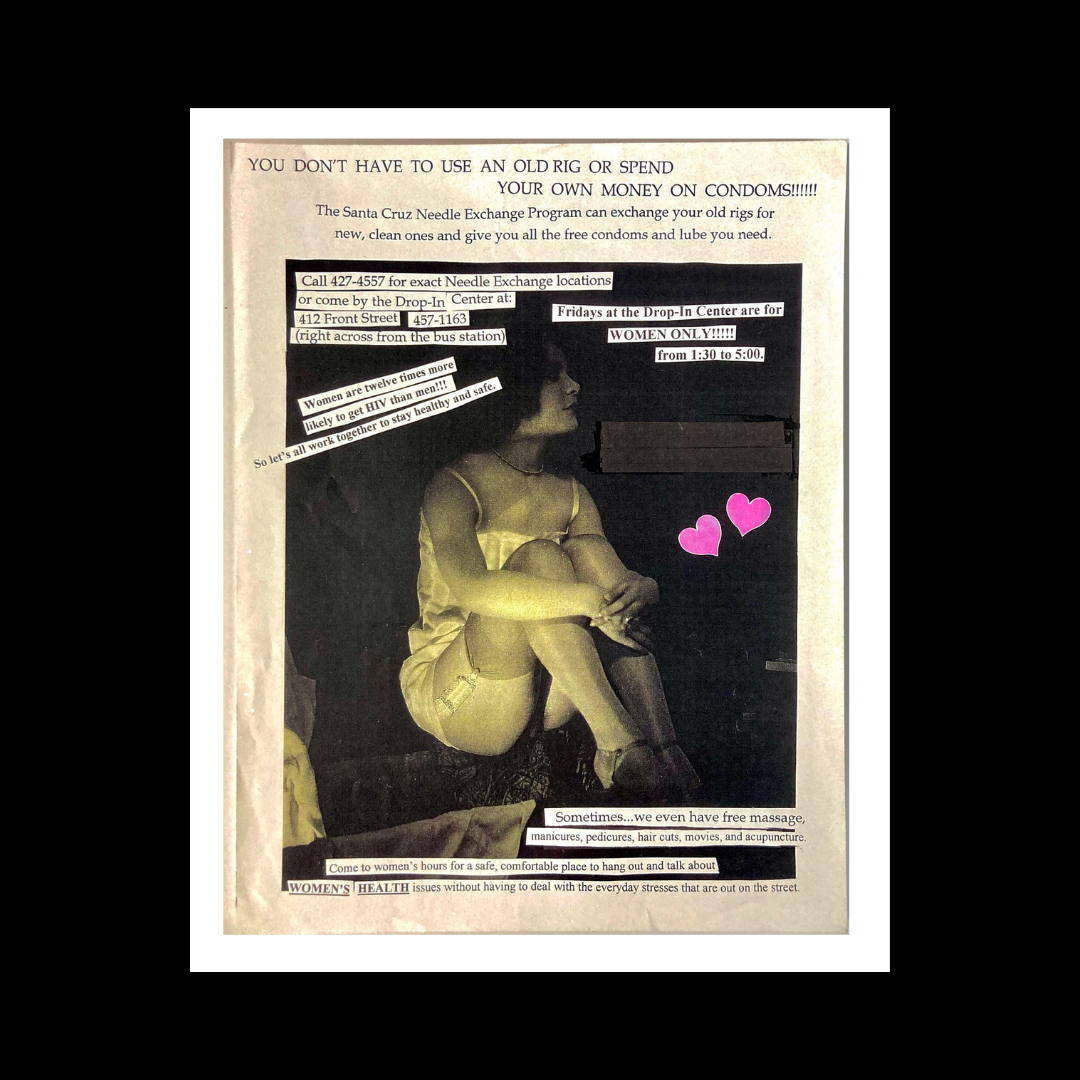
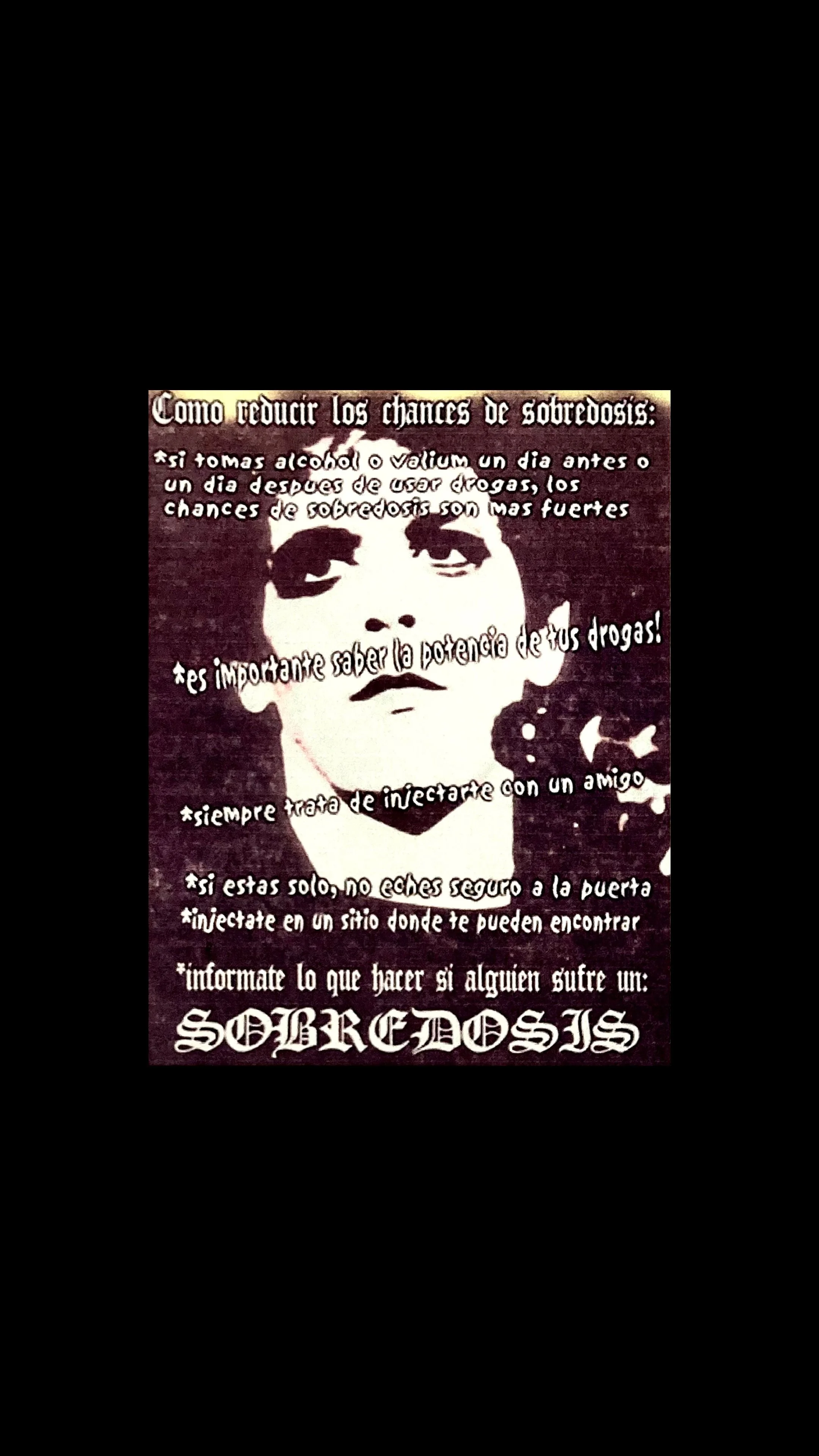
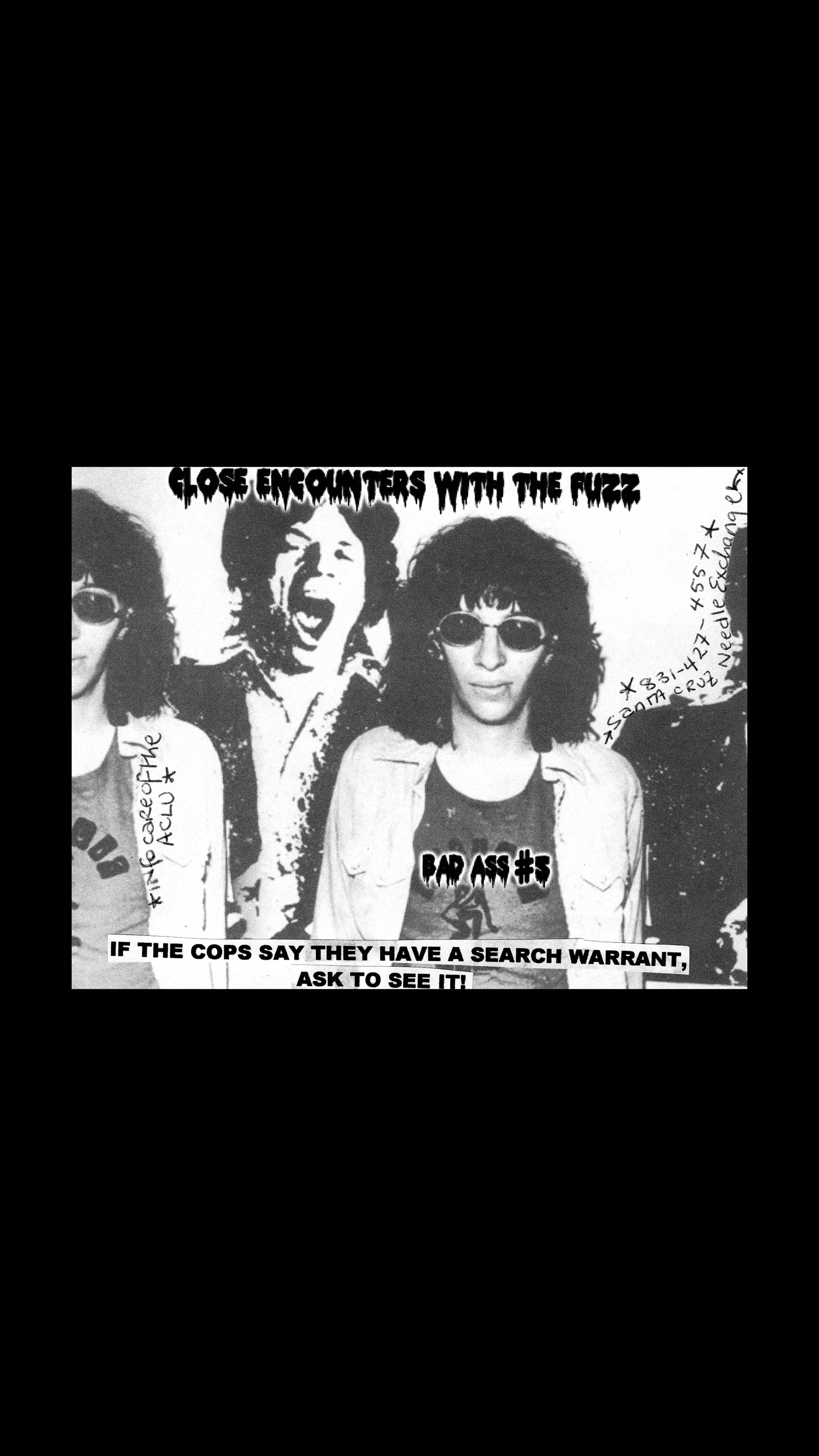
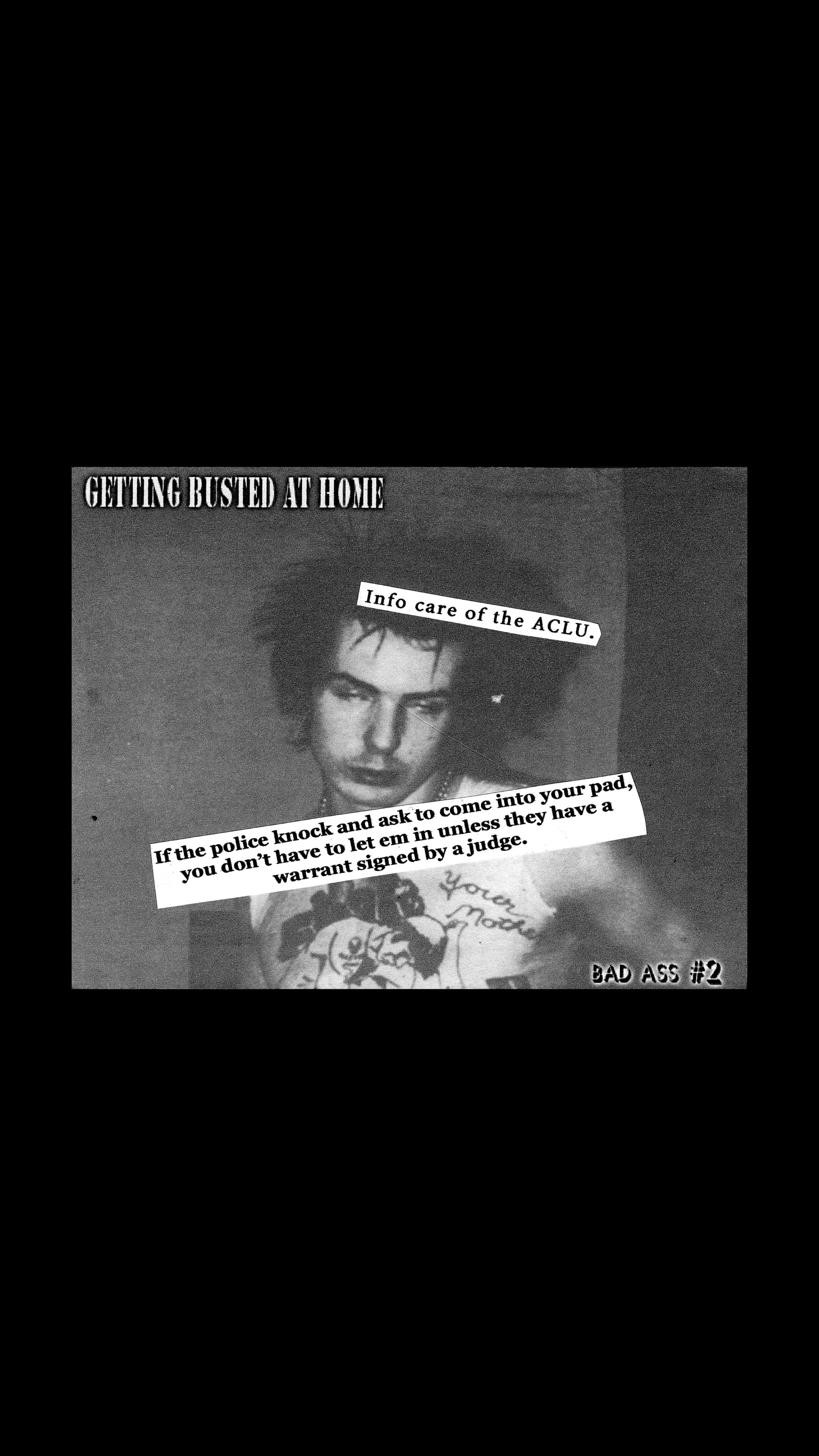
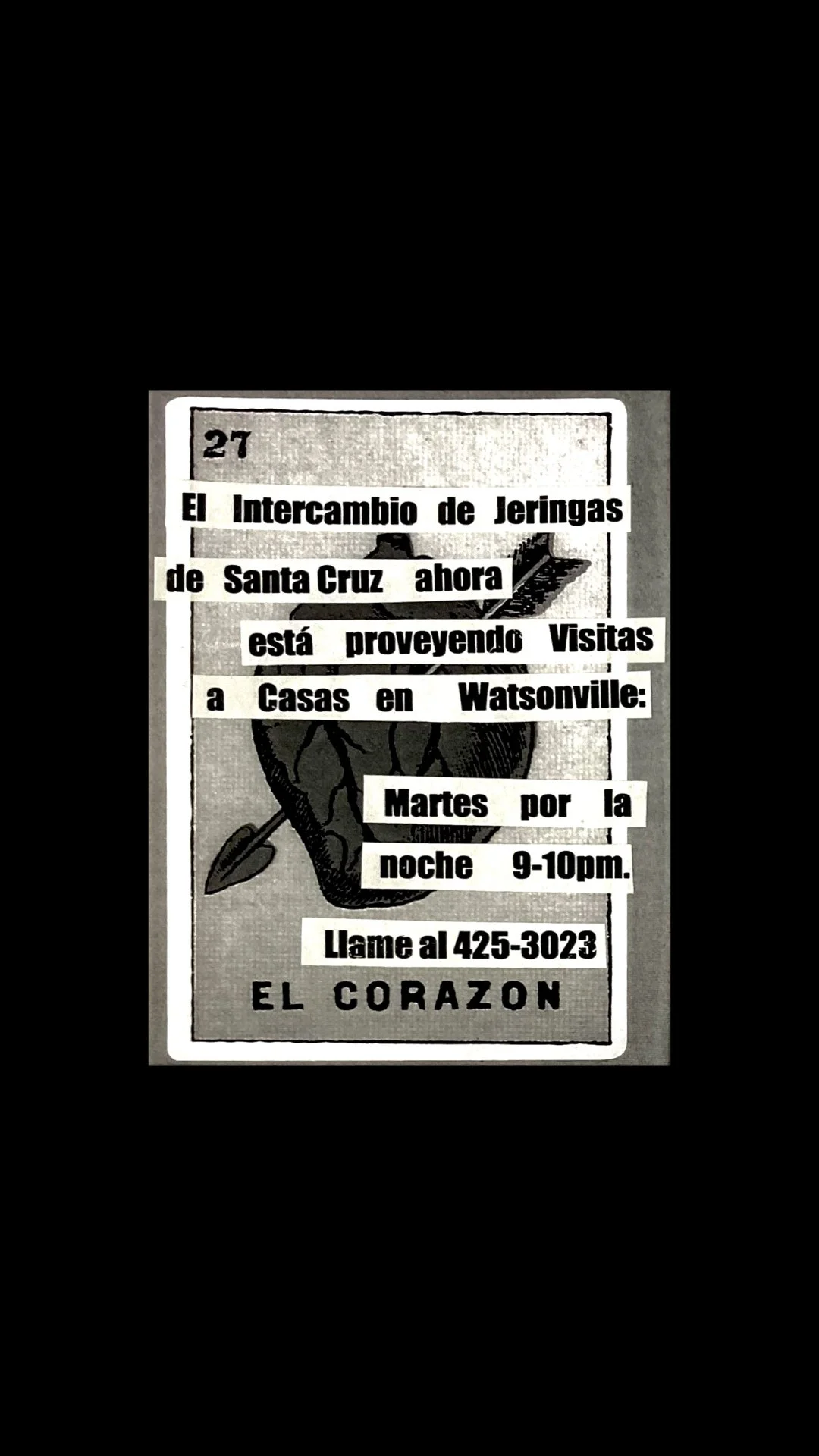
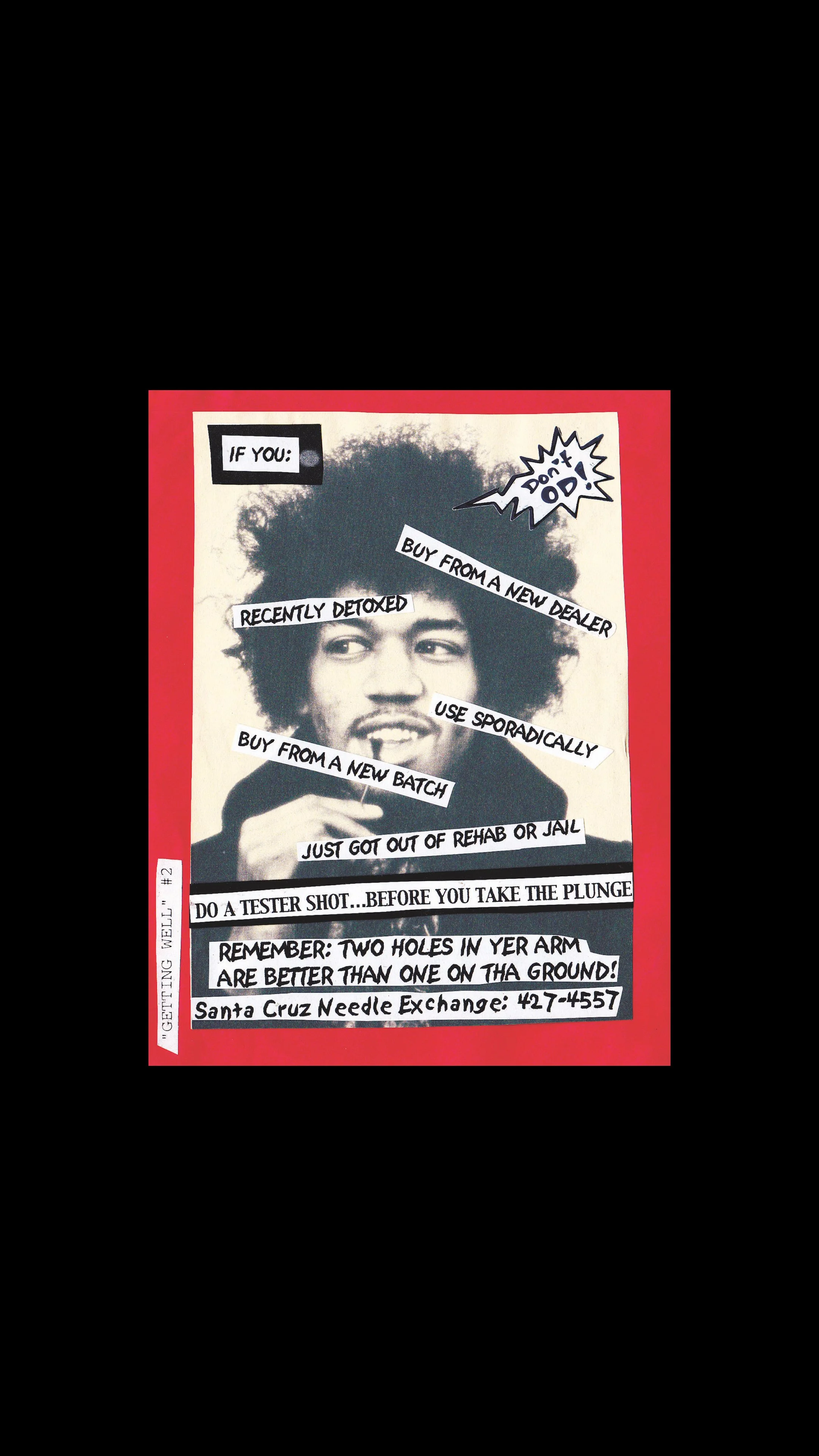
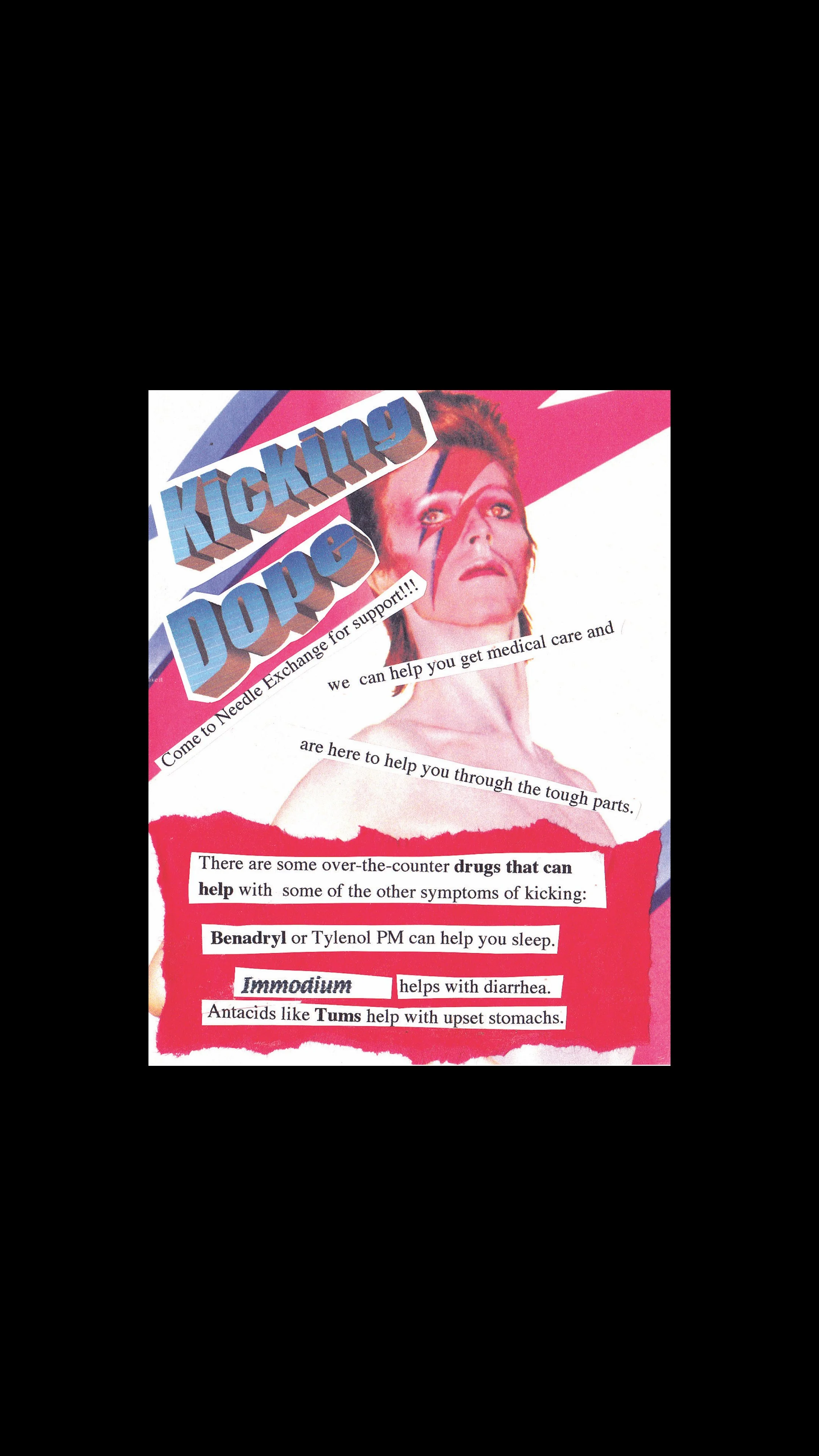
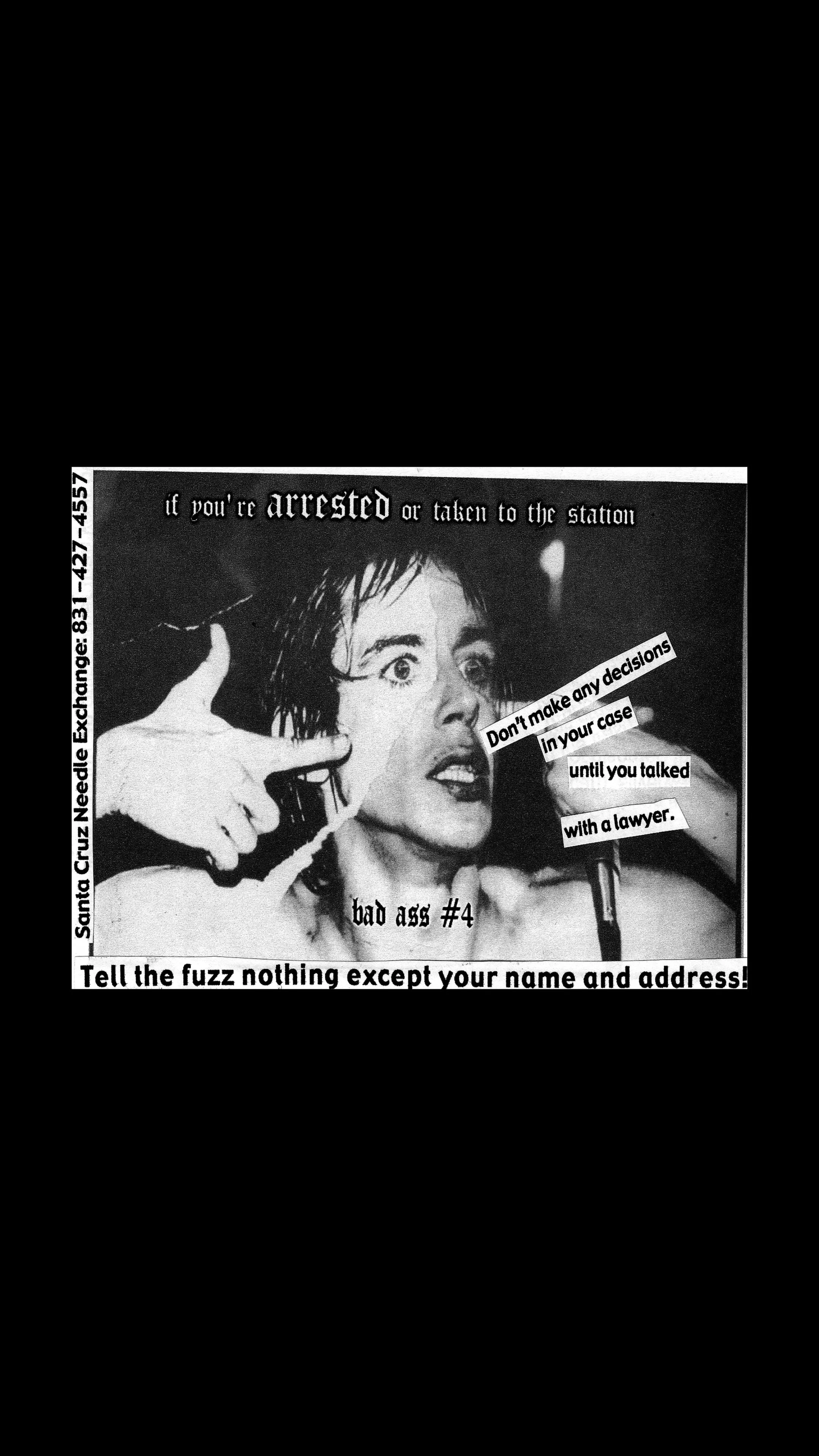
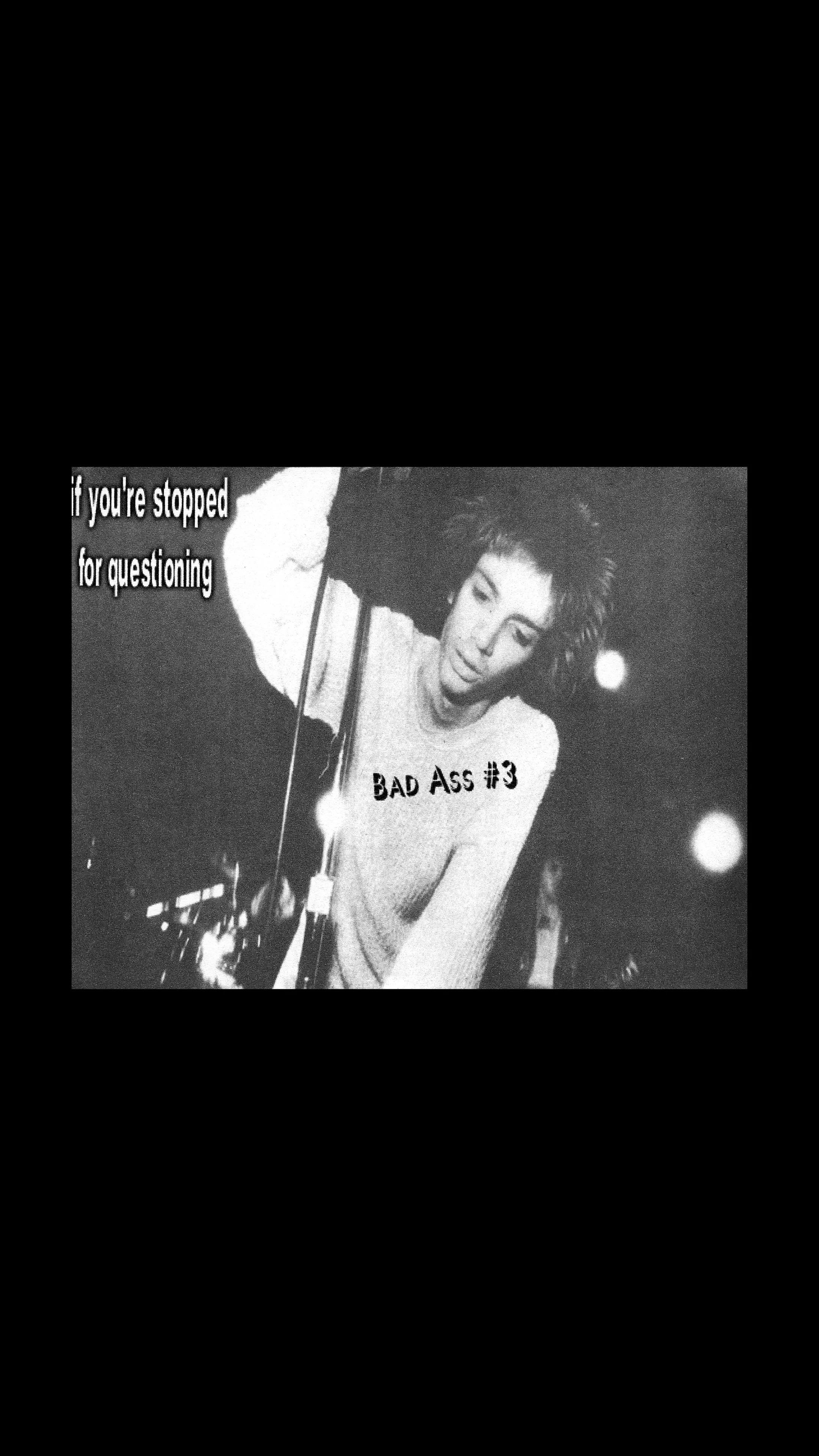
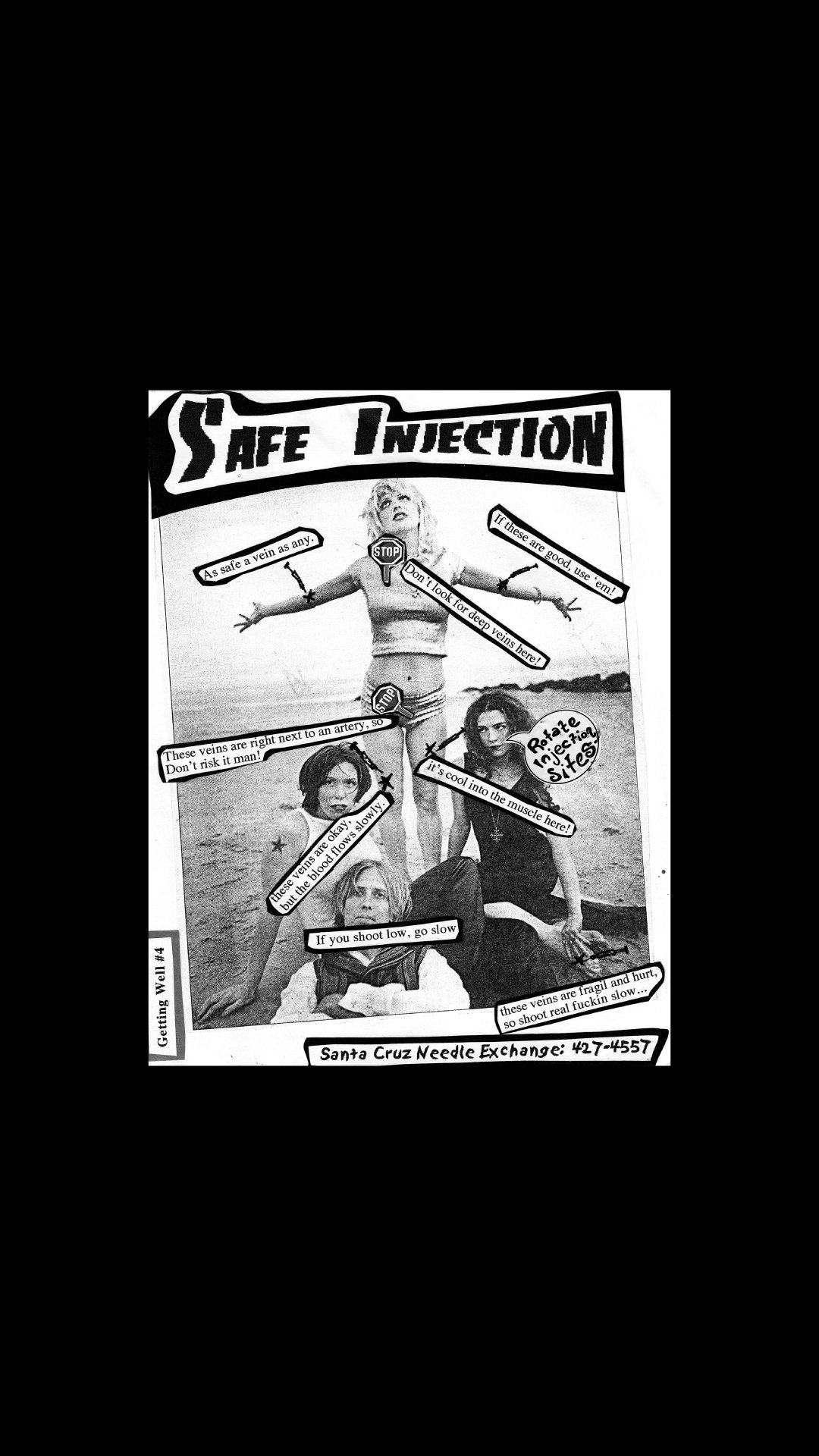
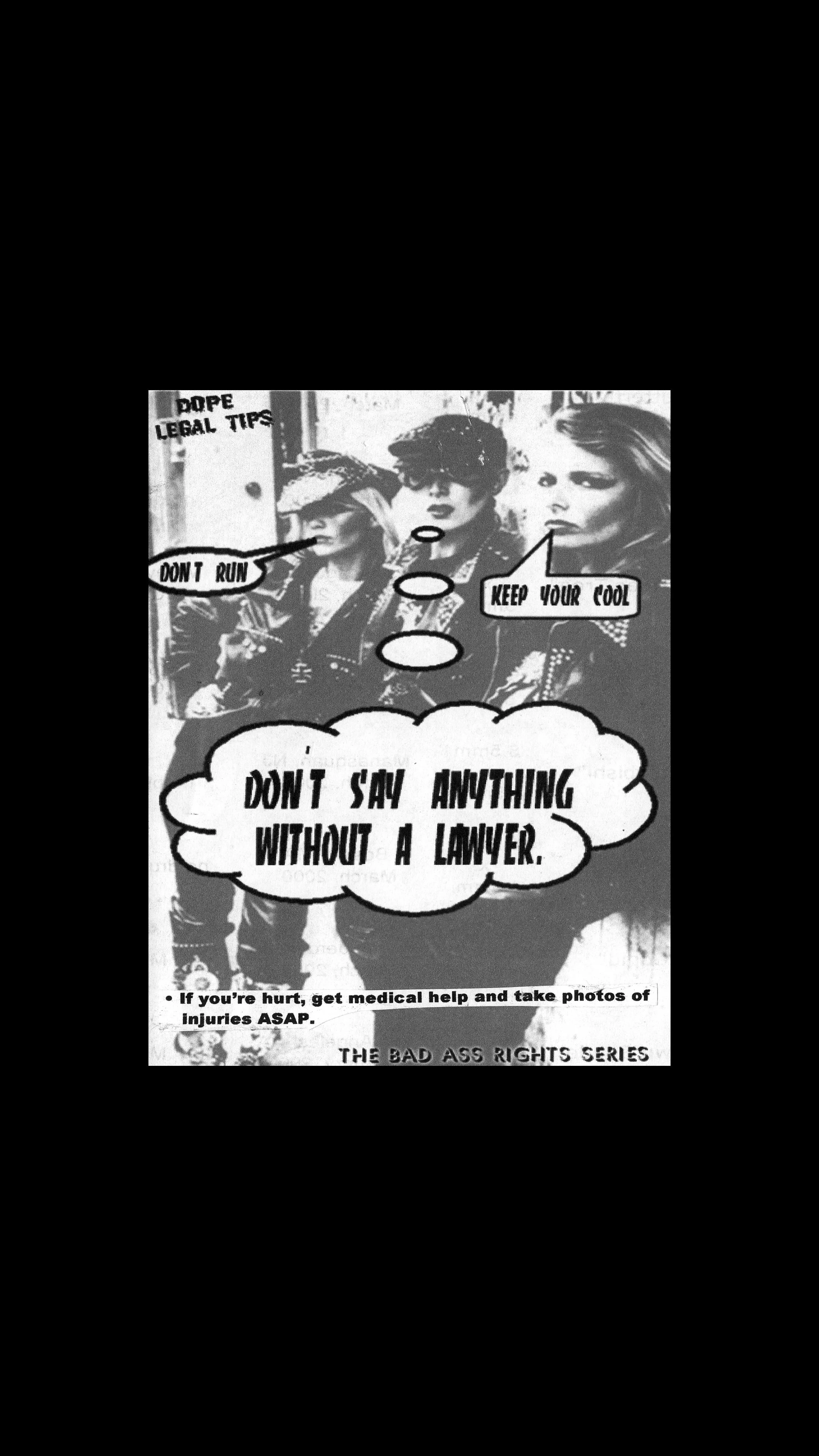
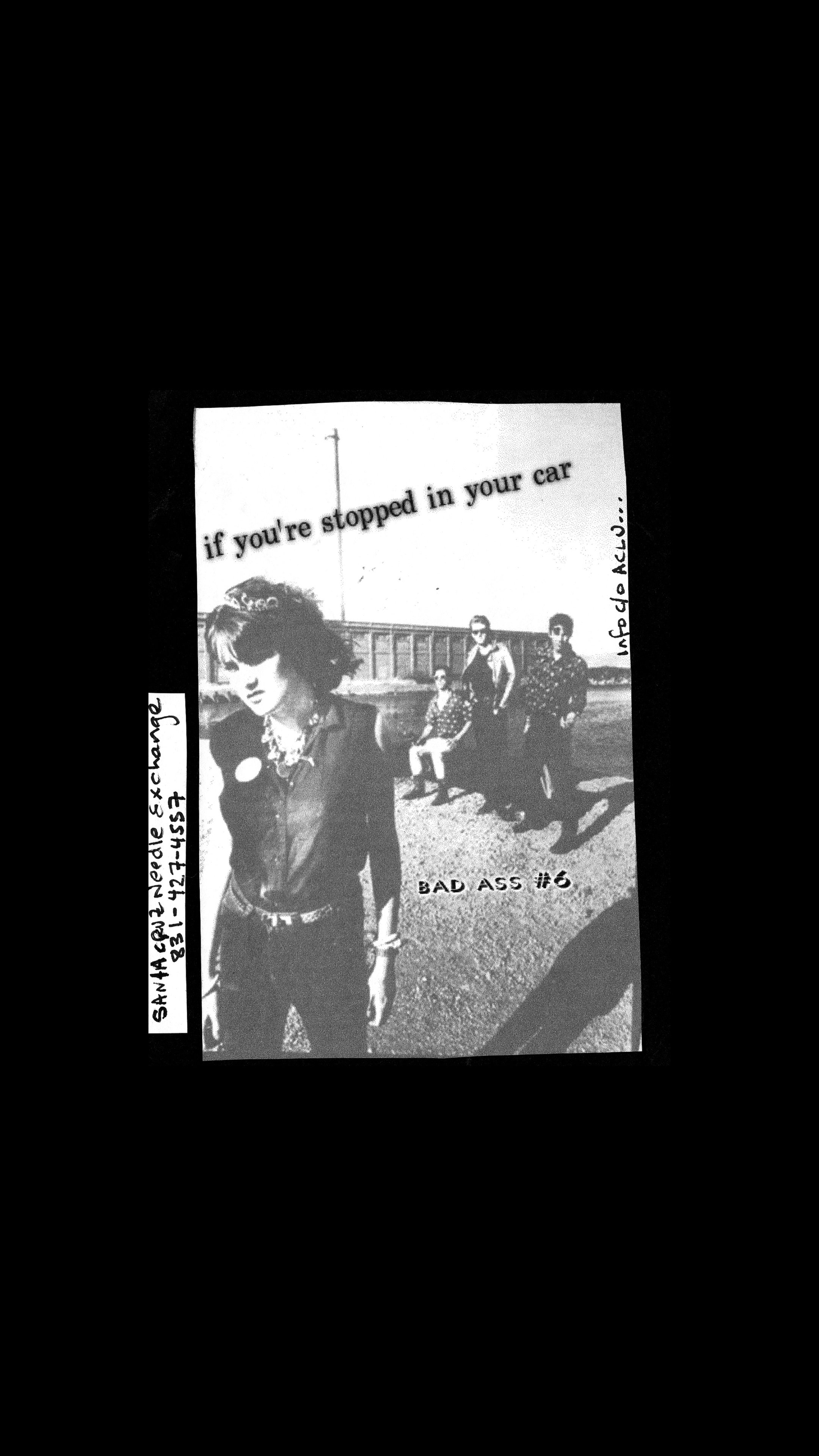
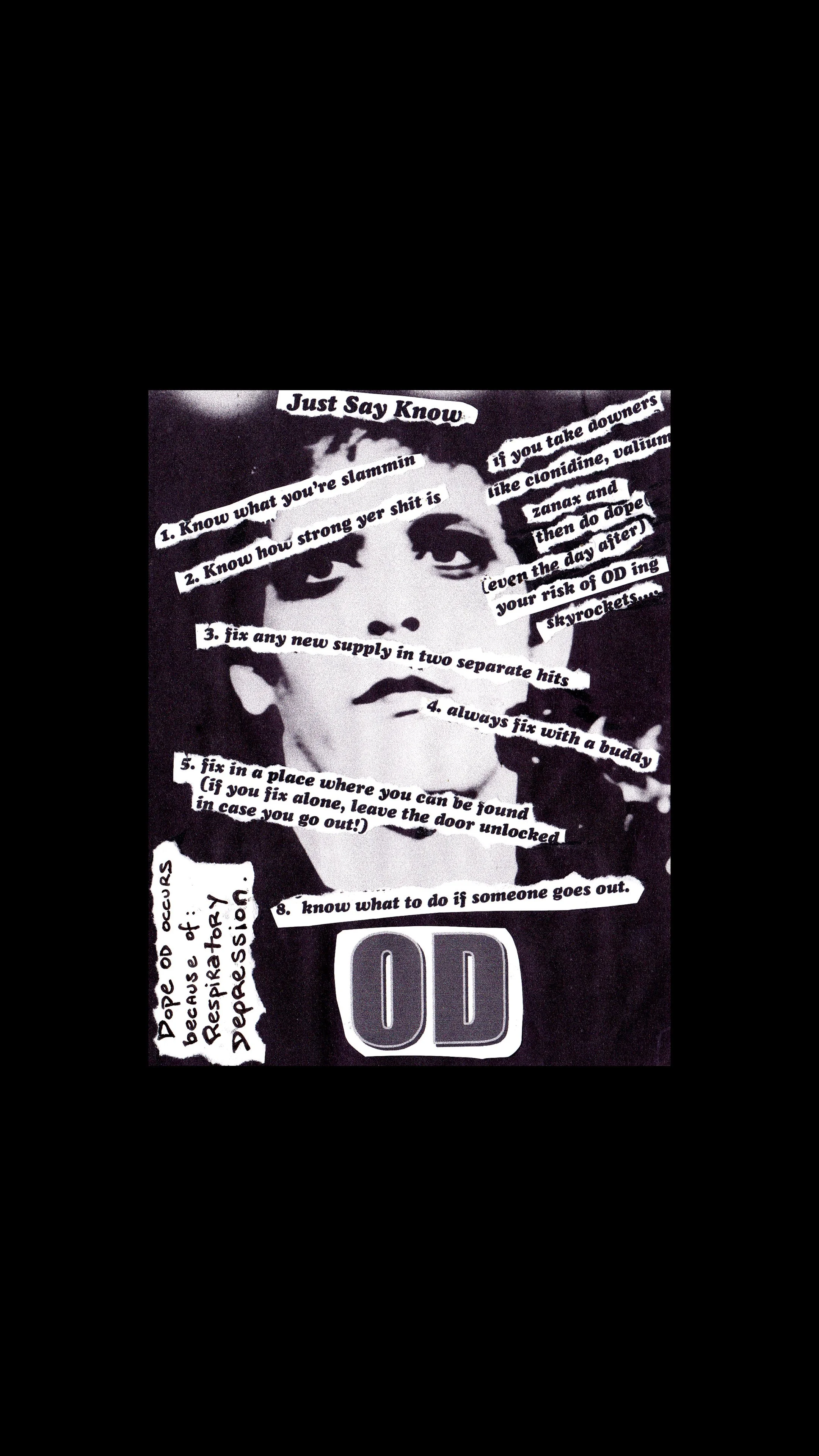
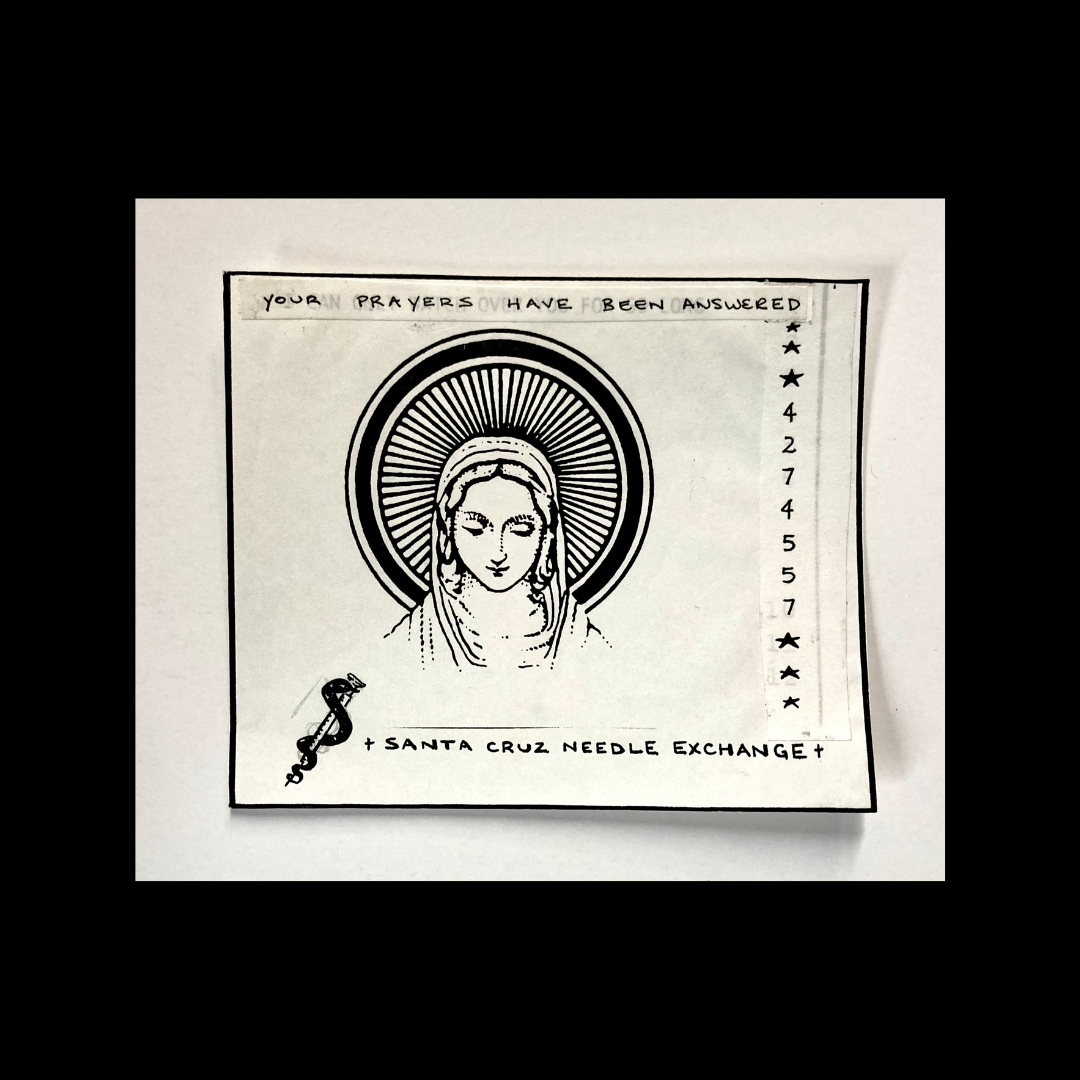
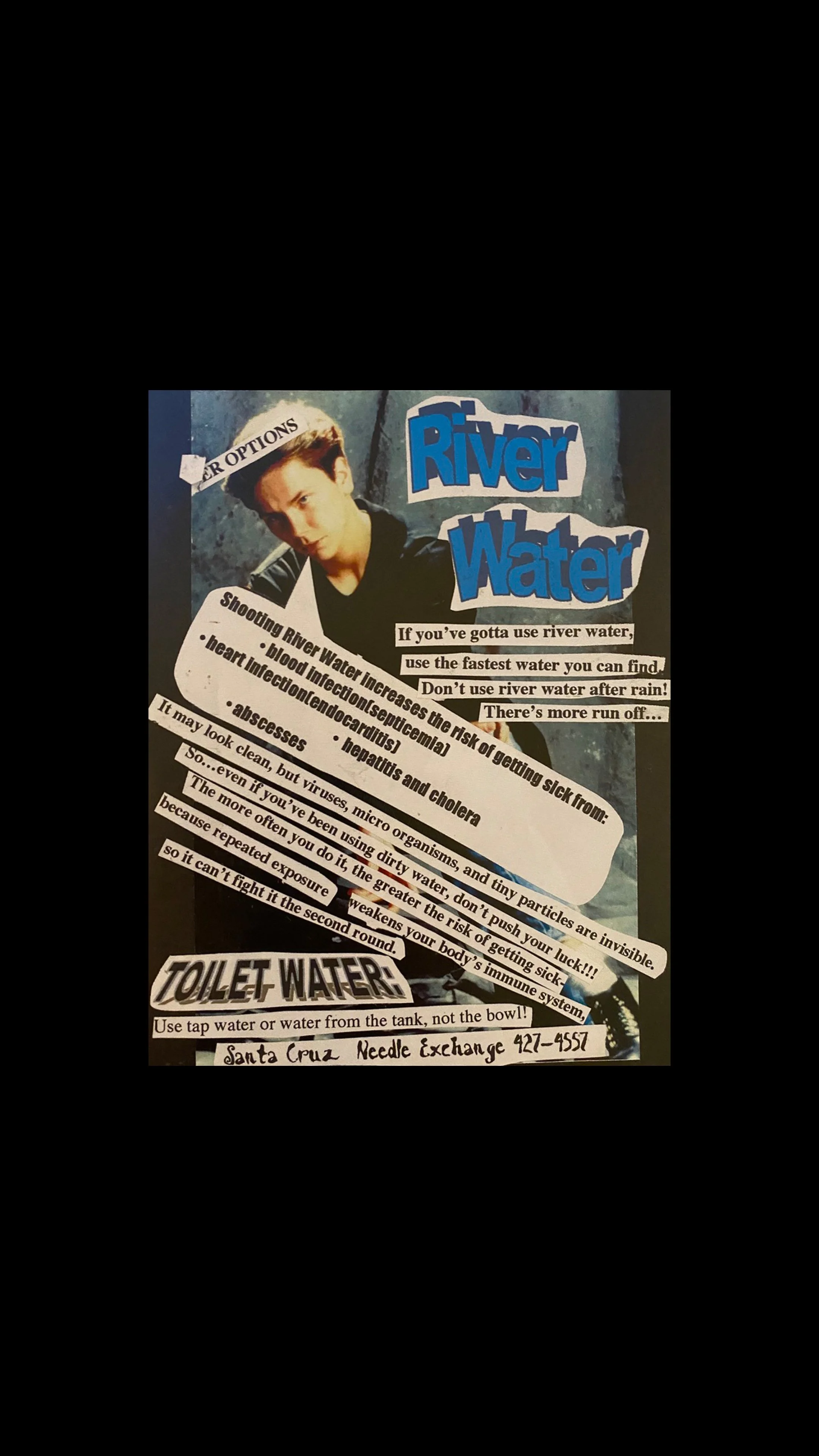
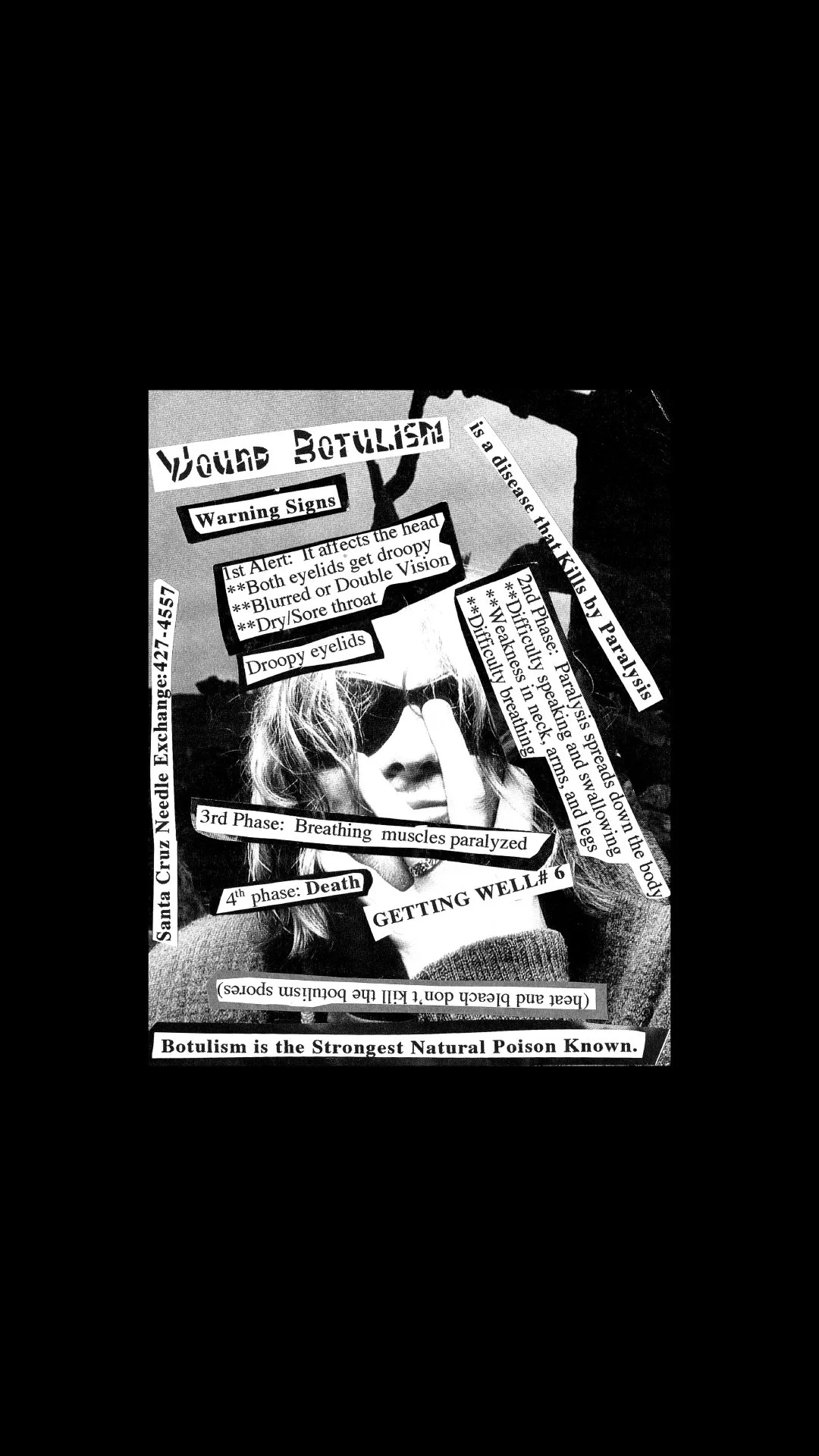
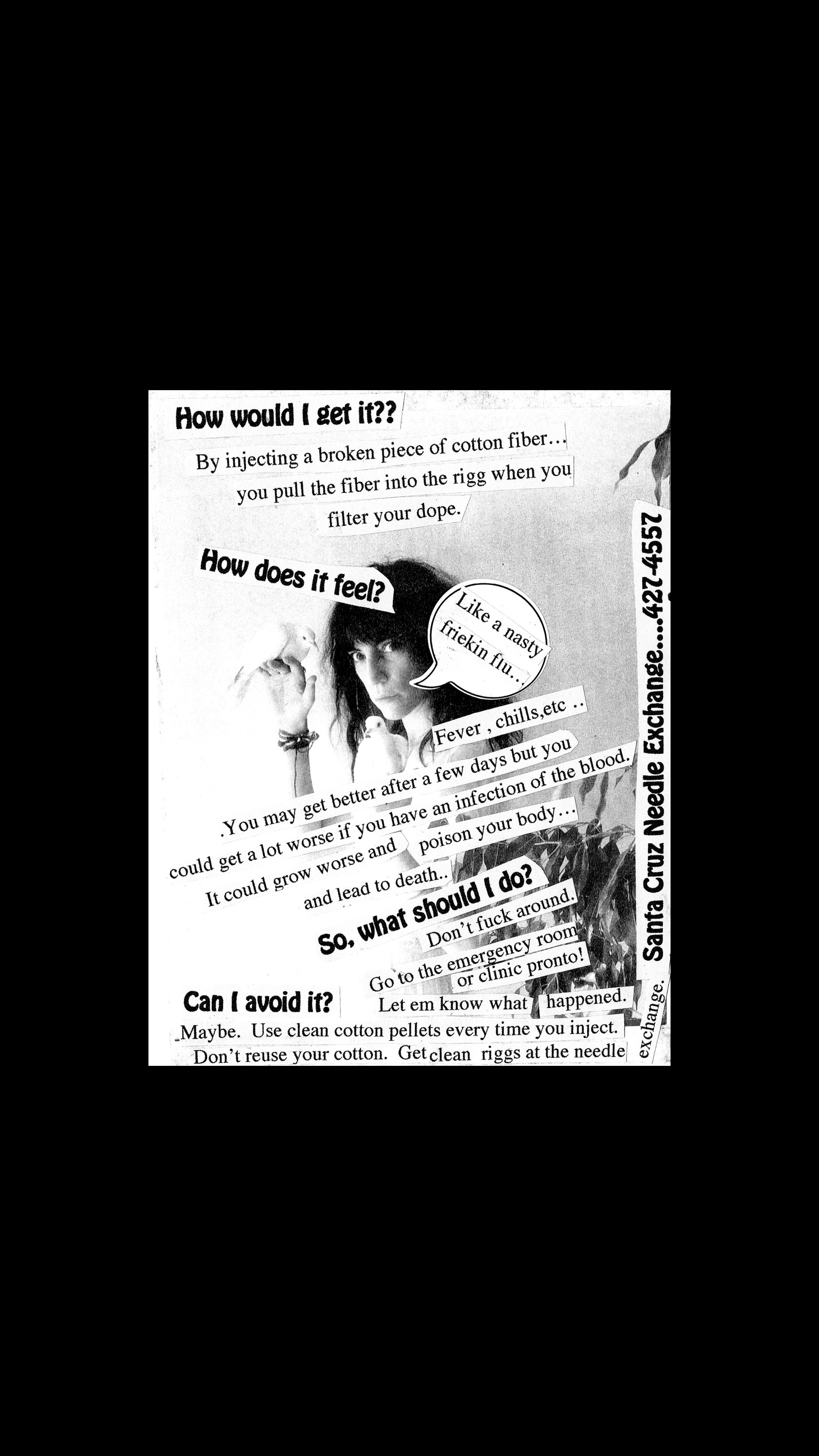
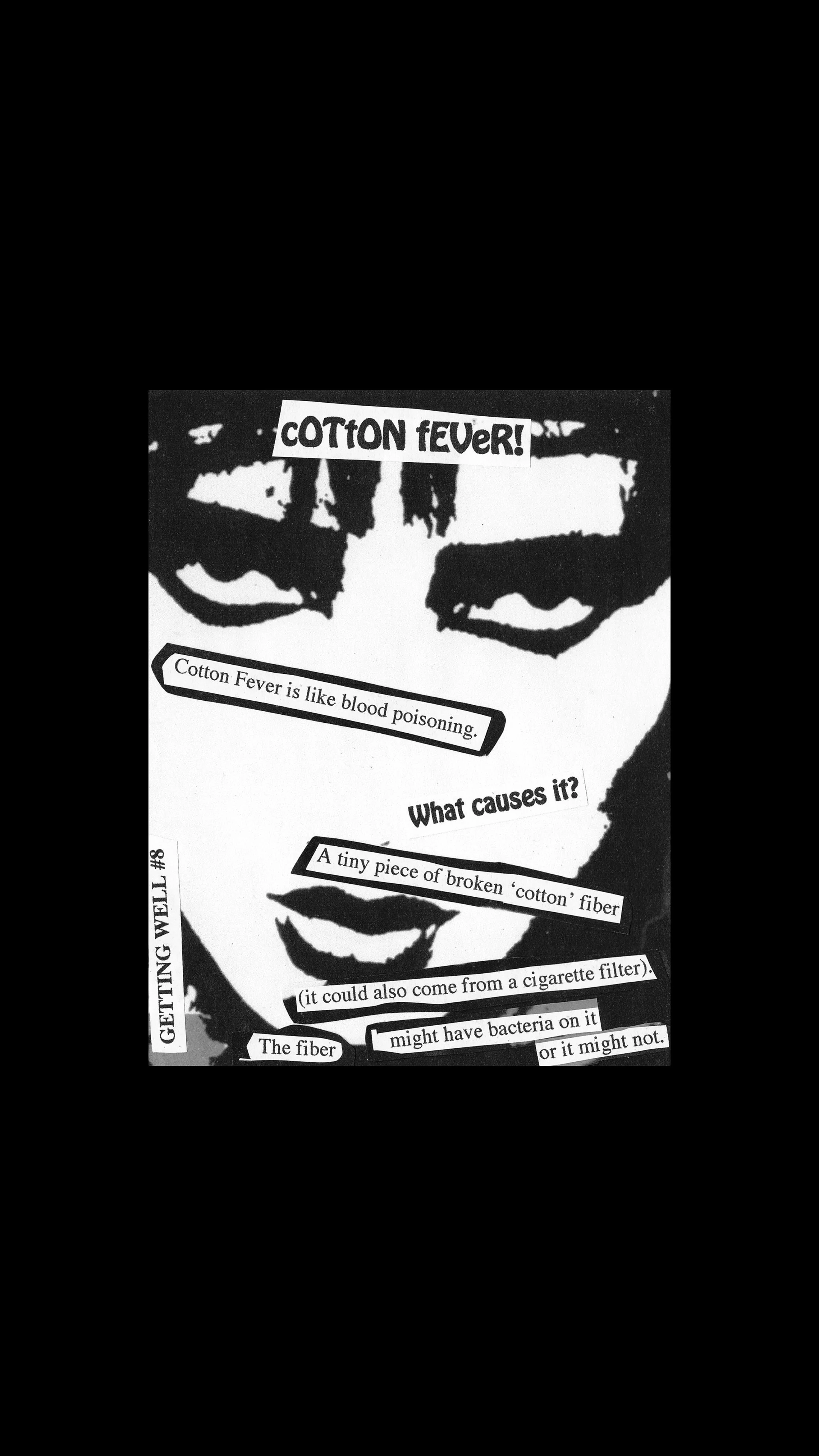
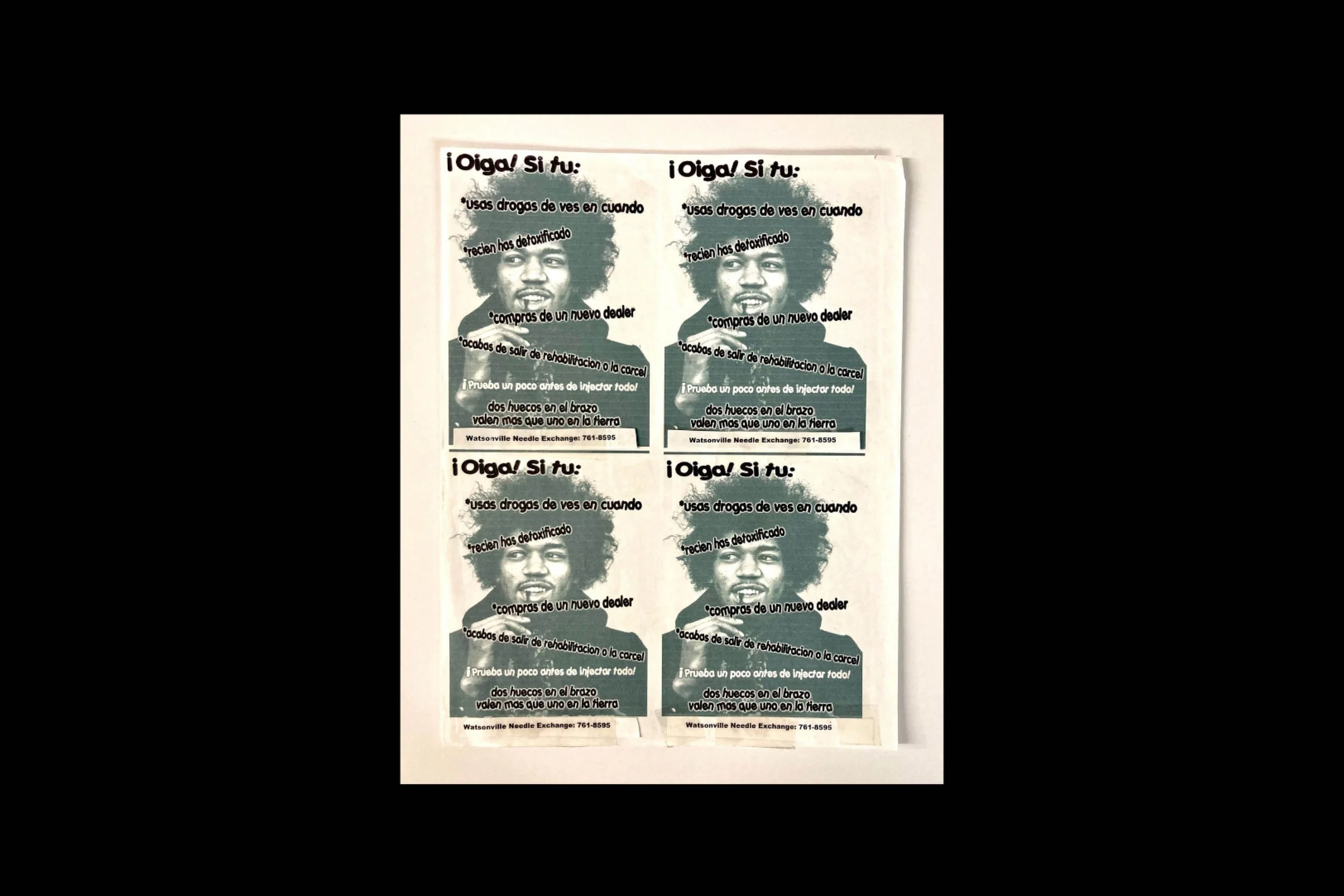
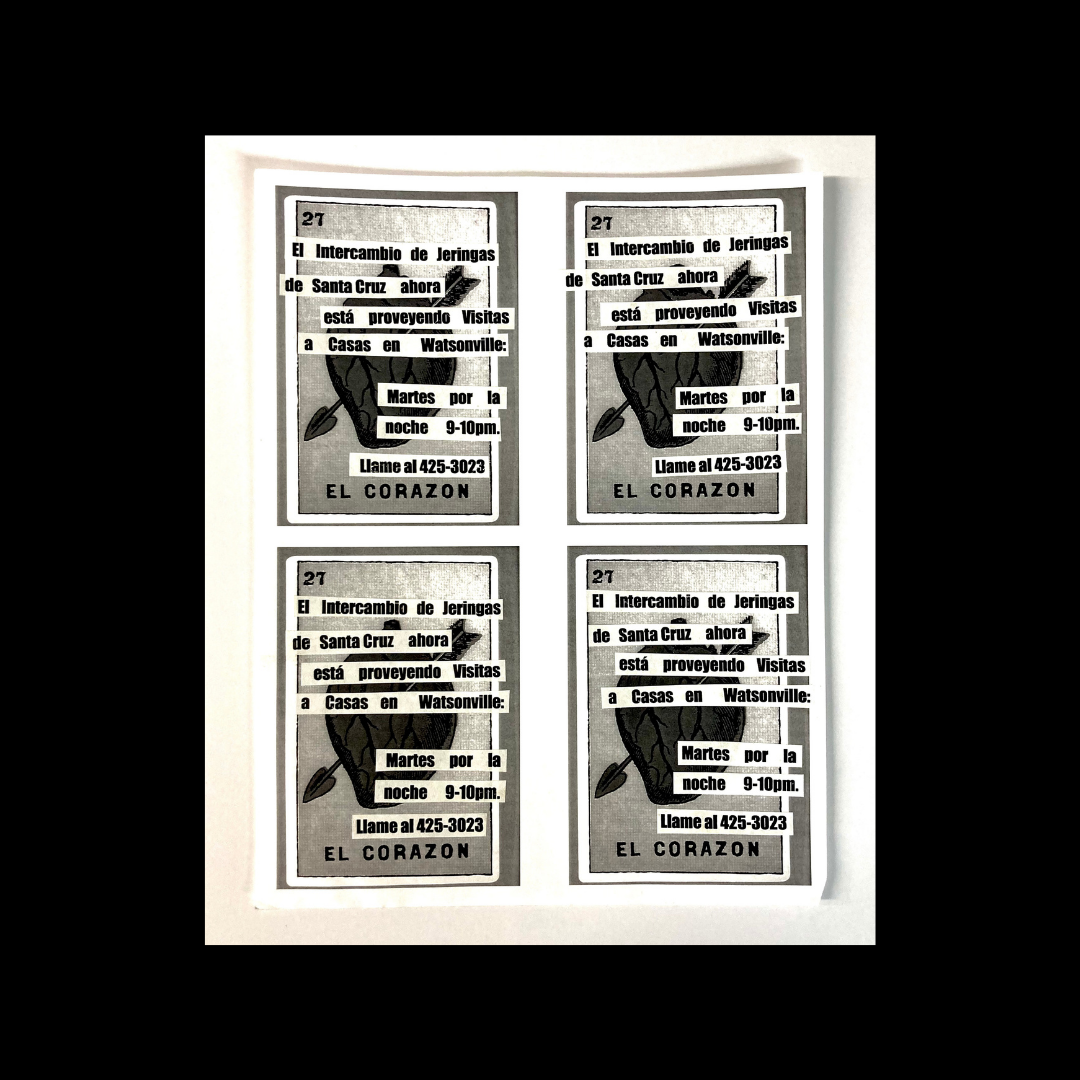
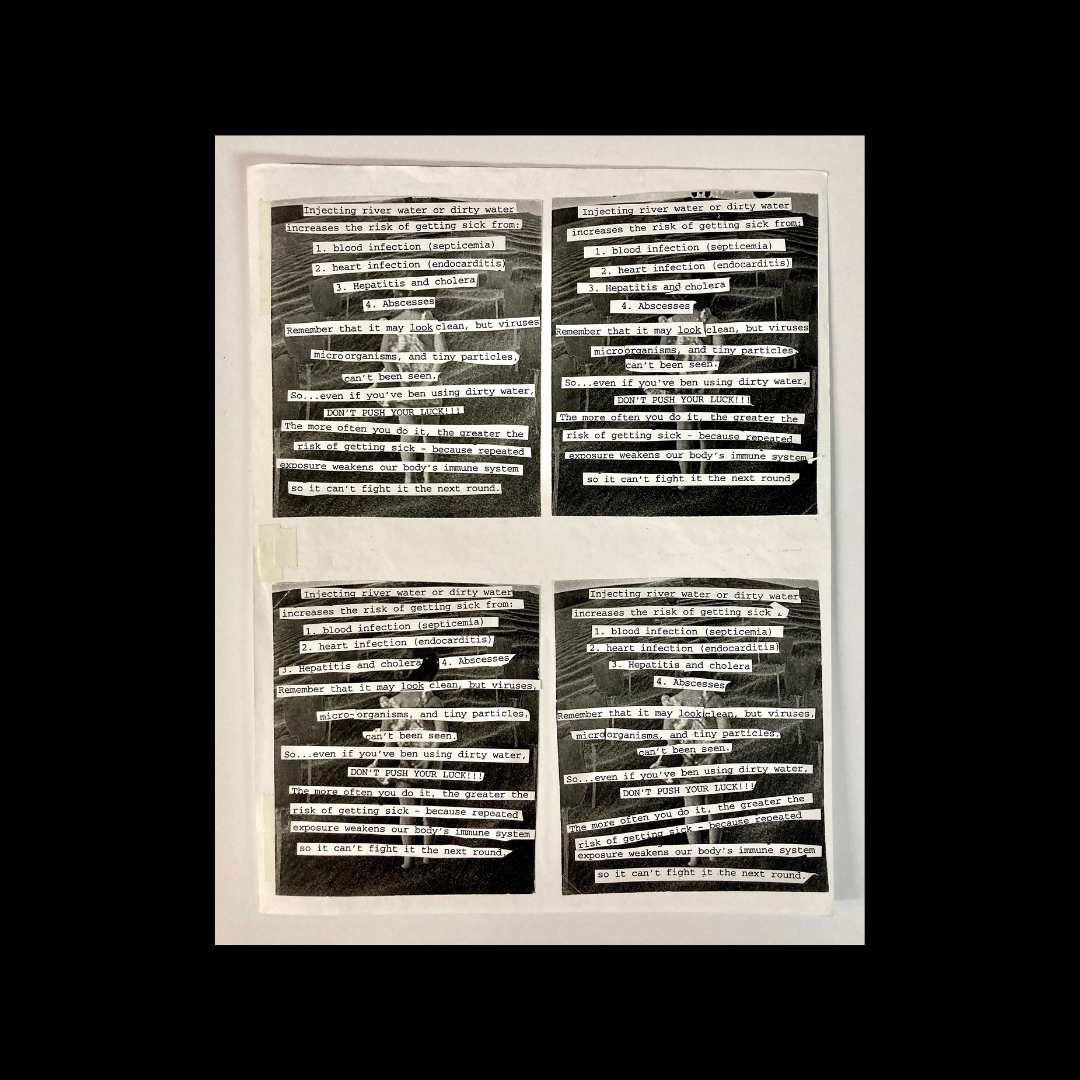
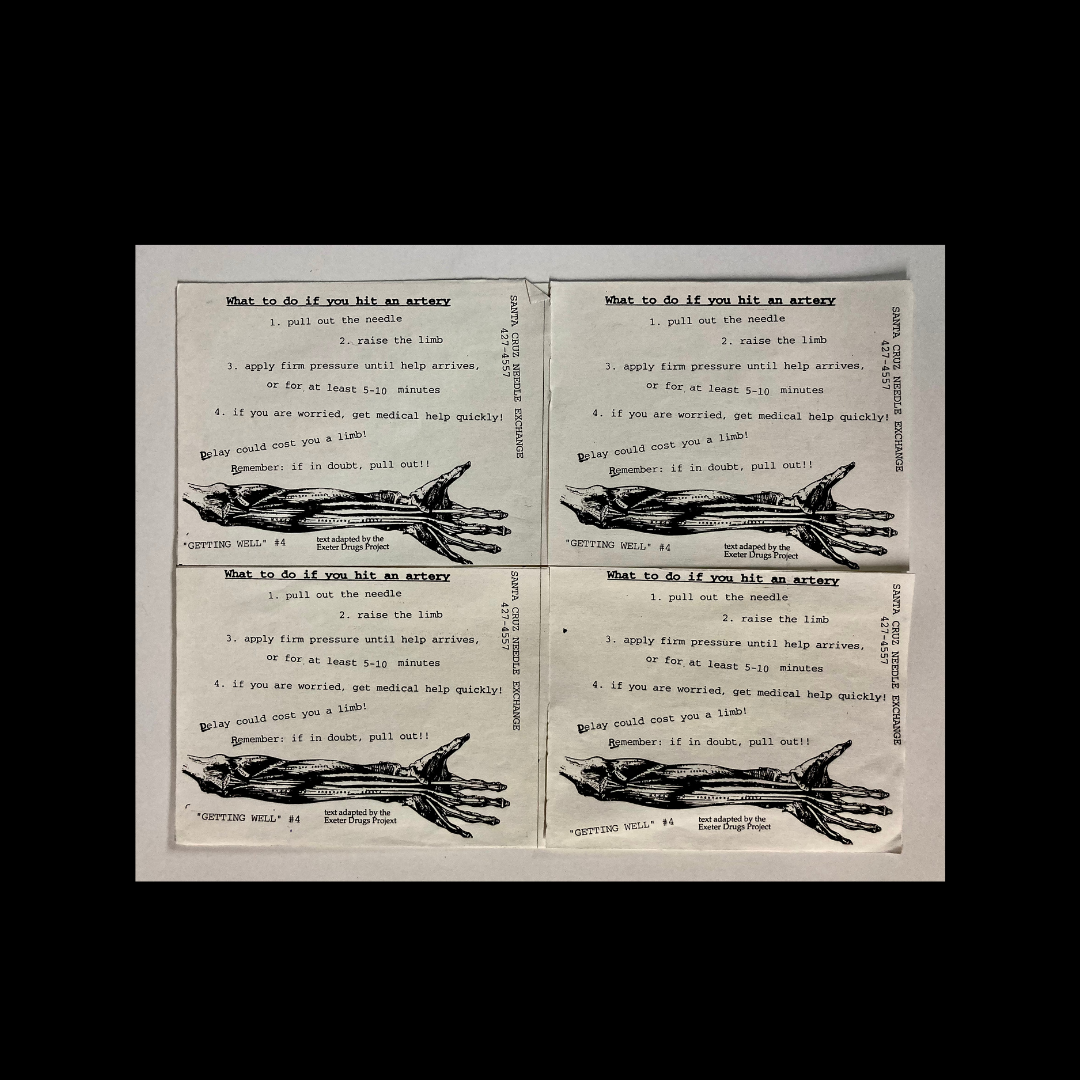
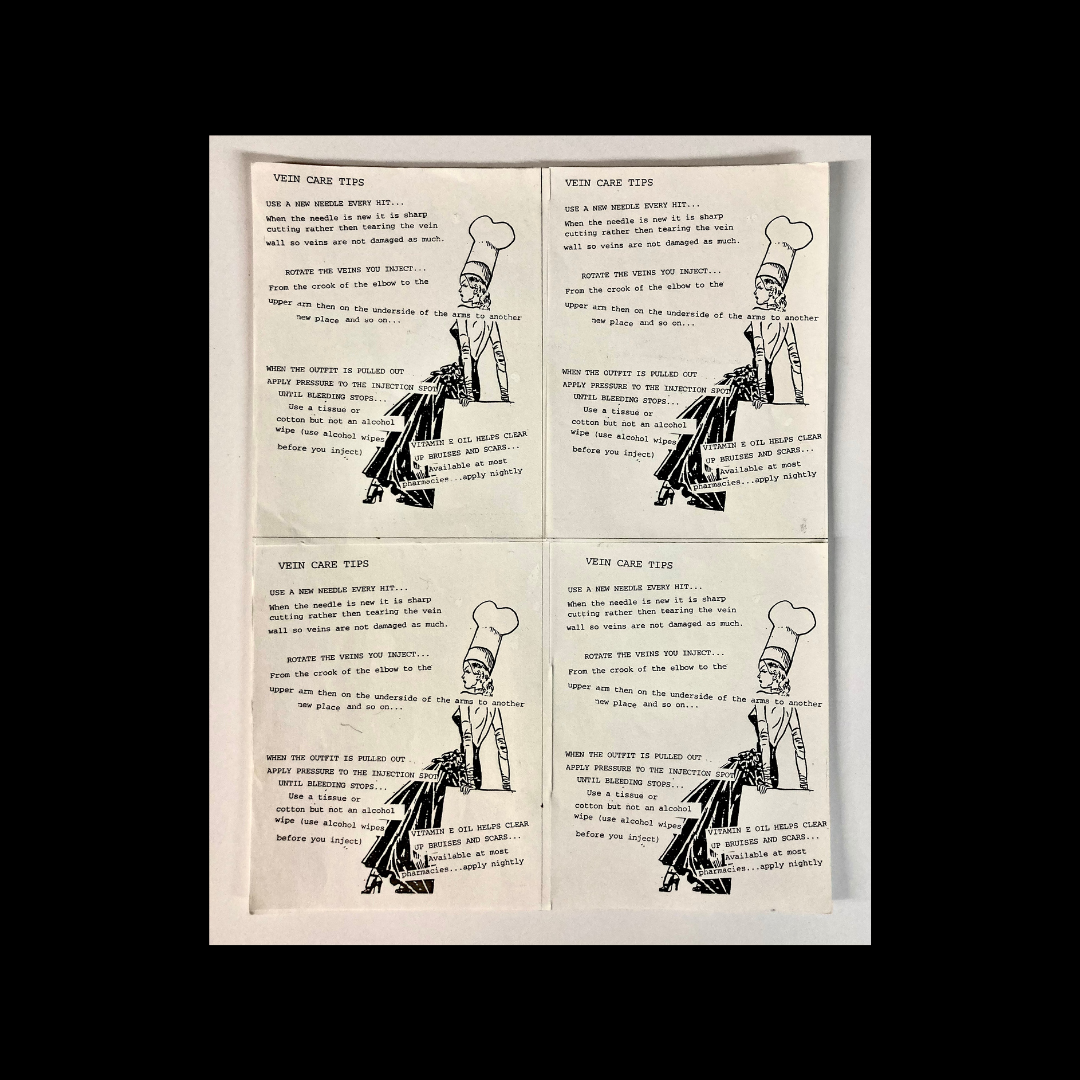
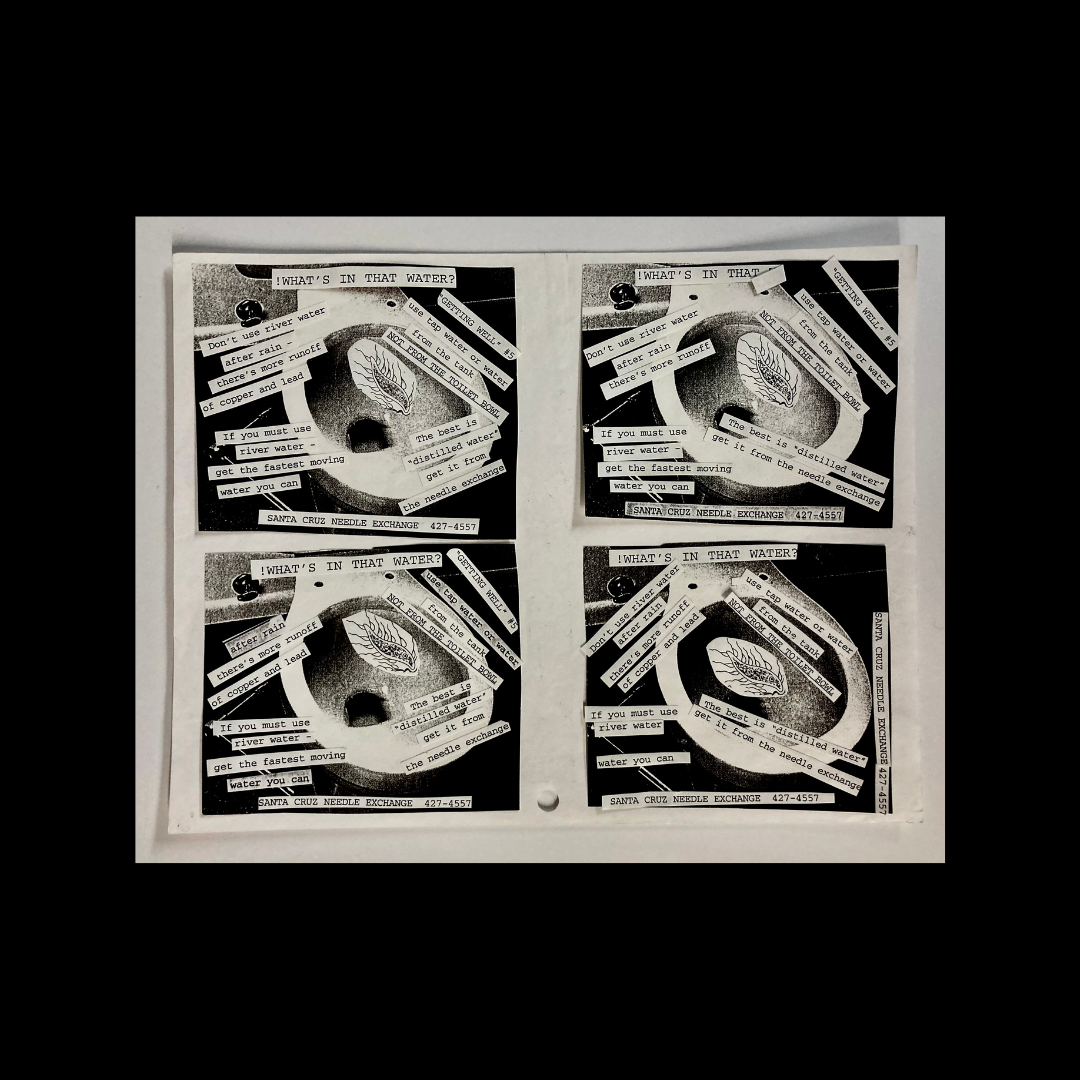
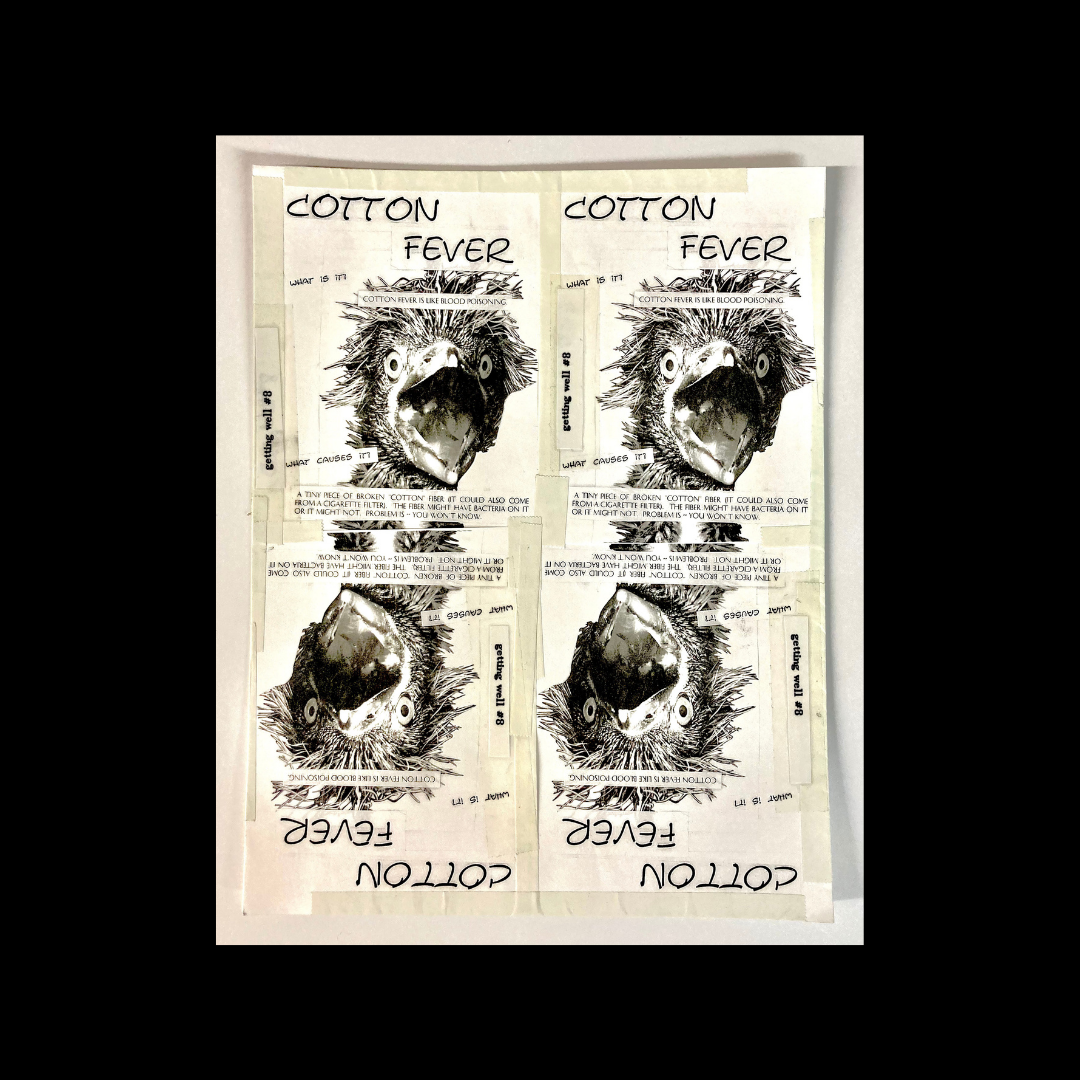
While Edney' s strategic alliance with educational institutions allowed SCNEP to provide services during a time when volunteers and participants were getting arrested, it was Edney's collaboration with artists that put SCNEP on the map. Edney was unapologetic in her approach, using art and photography to communicate safer drug using technique. Edney collaborated with numerous artists over the course of her tenure as Executive Director of SCNEP and their work is central to this archive.
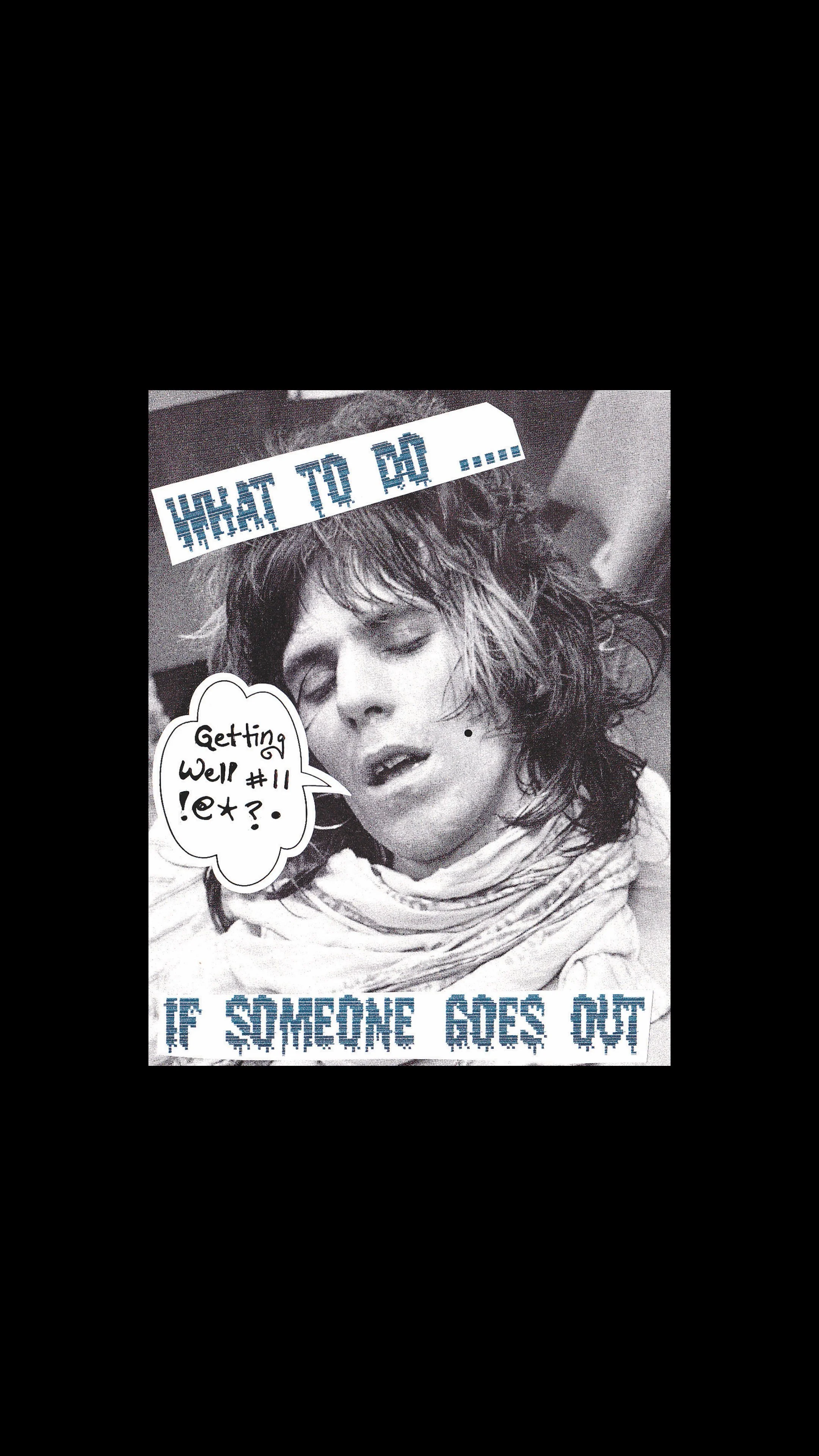
Thanks to the generosity of Kinko’s employees working the graveyard shift and the artistic contributions of Susan Pratte, Brooke Lober and Eleanor Herasimchuk, Edney produced a series of zines titled junkphood, which enjoyed worldwide distribution thanks to the support of the Harm Reduction Coalition, Drug Policy Alliance and Lindesmith Center. Looking for any excuse to shut down SCNEP, the Santa Cruz Police Department pressured Edney to discontinue the publication and distribution of the zine. Edney told them what they wanted to hear and went on to publish four additional issues which were distributed covertly.
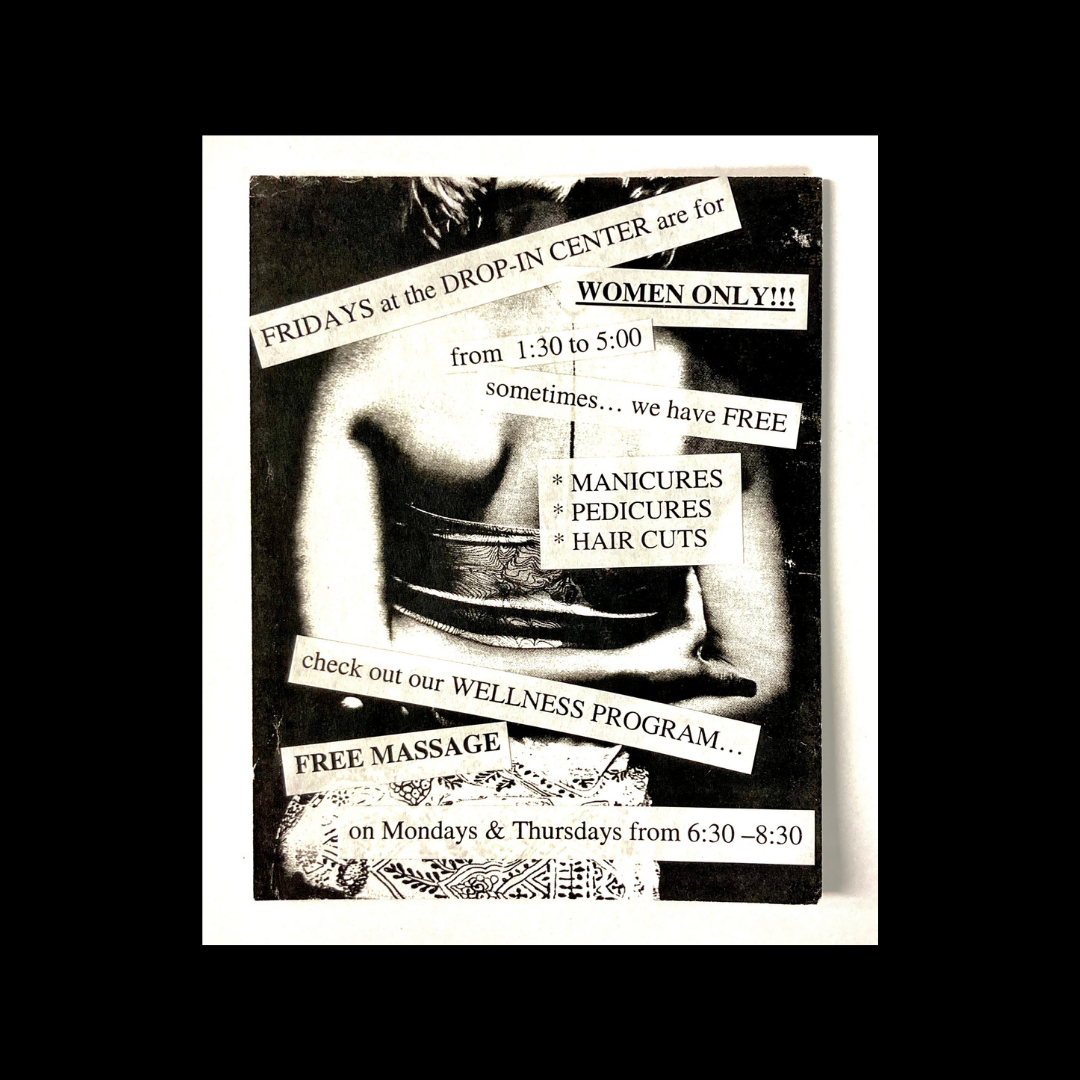
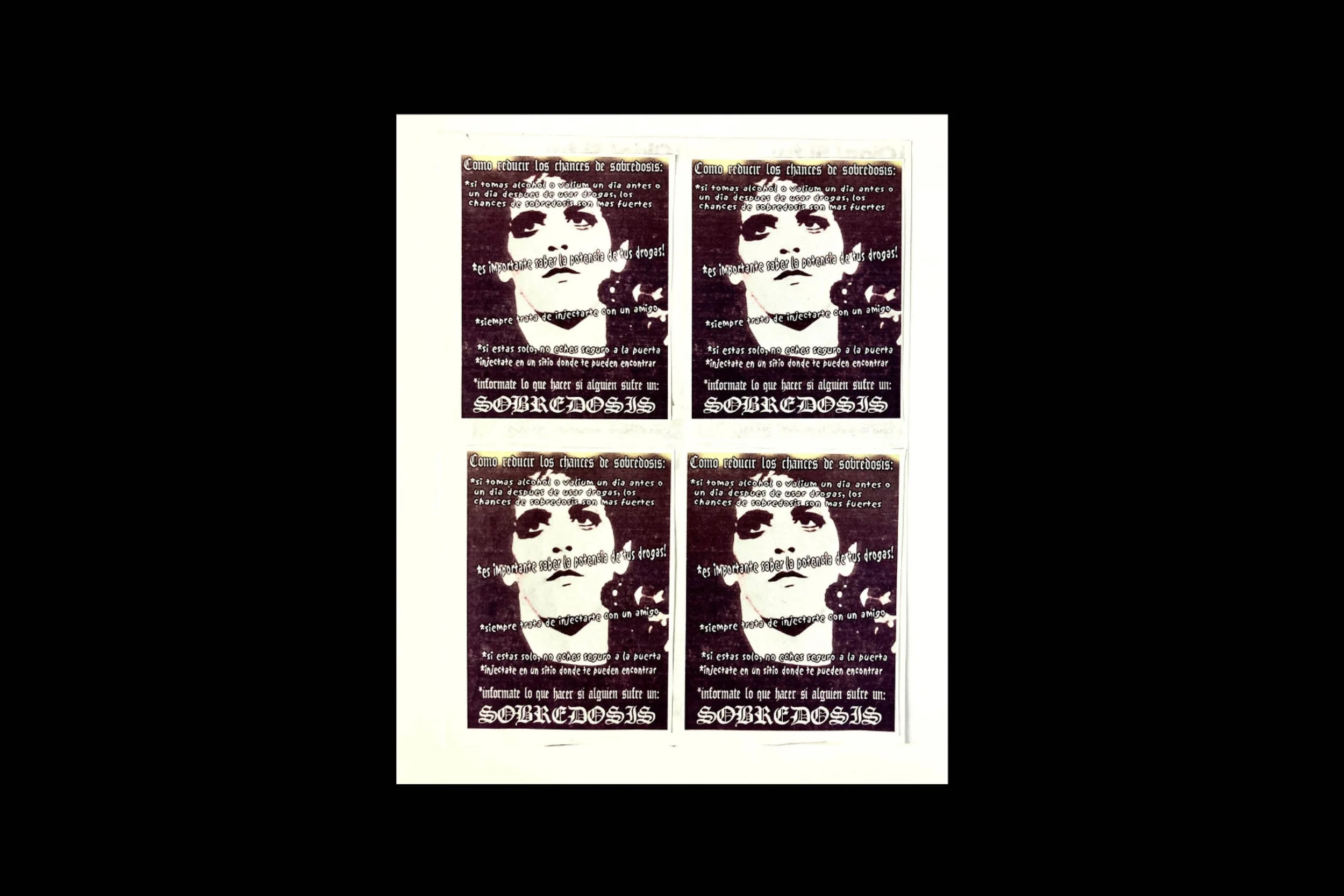
Creative outreach strategies like zines and flyers, drop-in hours for women, childcare, and services for young people were important pillars of community care. Feminism, and the leadership of young women was central to their work. This mirrored a major change that took place in the second generation of AIDS risk reduction, a movement whose approaches had previously centered men and often overlooked the needs of women.
This comprehensive strategy widened the scope of the harm reduction movement. Groups like SCNEP focused on the bigger picture needs of people at risk for contracting HIV/AIDS, and ultimately, viewed programs like the needle exchange as a way to protect communities against a wider variety of hardships and illnesses, namely overdose. As a means to an end, Edney served as co-investigator for the You Find Out (UFO) Study at the University of California at San Francisco. Initially, the study’s main objective set out to study hepatitis B and C prevalence among young injection drug users in San Francisco. When UCSF approached Edney about including SCNEP as a second cohort, they were just beginning to notice what Edney had known for years. Overdose was the primary concern of younger users as opposed to HIV&HCV. The synergistic relationship between the experience of people who use drugs and the findings from the UFO Study resulted in foundational overdose prevention messaging such as not using alone, not mixing heroin with benzos and doing tester shots.
What began as a serological investigation with a vaccine program morphed into the first overdose data of its kind in the US.
Among her many essays and publications Edney coauthored (along with Rod Sorge, Synn Stern and George Clark) Getting Off Right: A Safety Manual for Injection Drug Users, published by the Harm Reduction Coalition. It was the first and only guide for safe injection practices in the United States. Edney also served on the Harm Reduction Working Group in the 1990’s that was responsible for laying the foundation that the nascent field would take into the future.
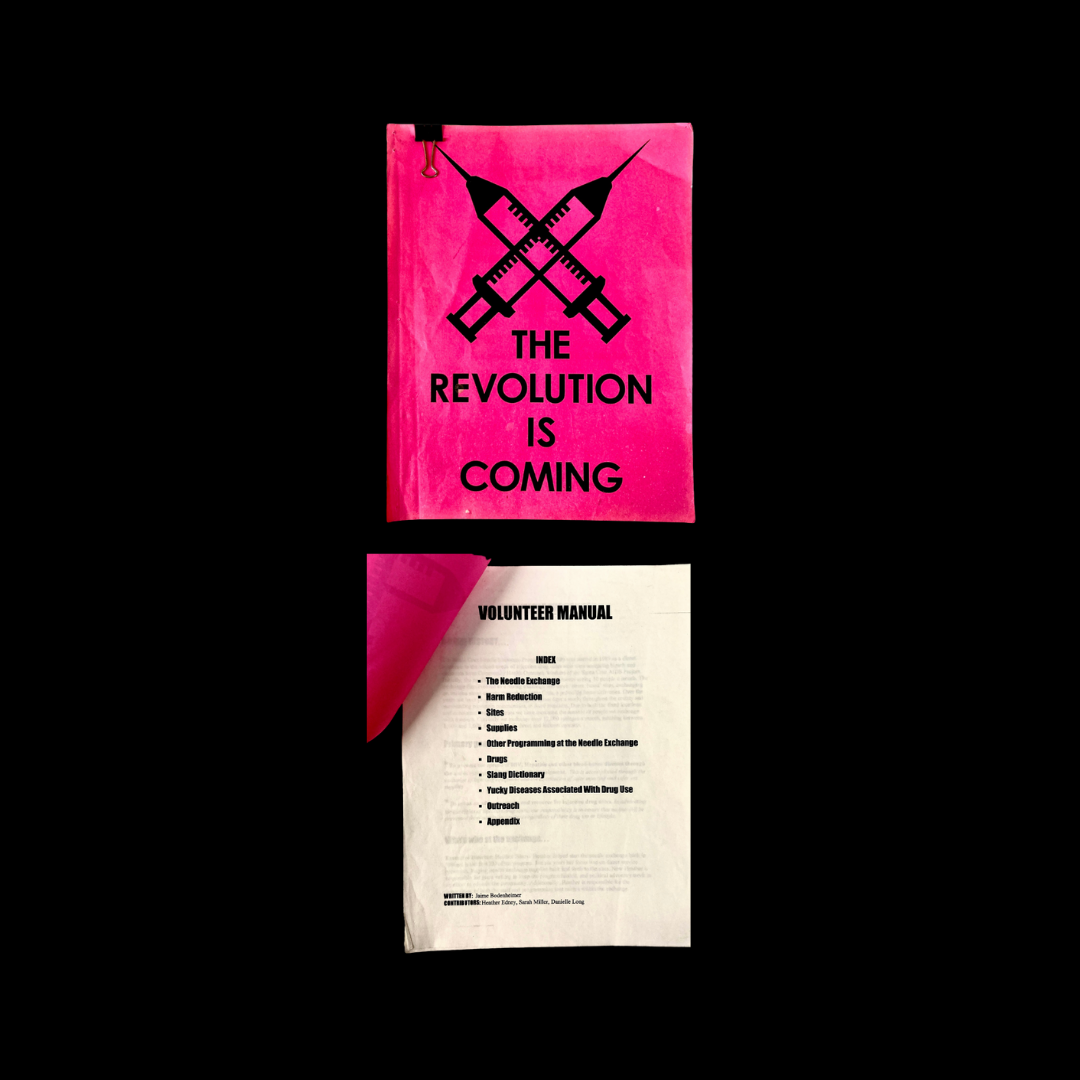
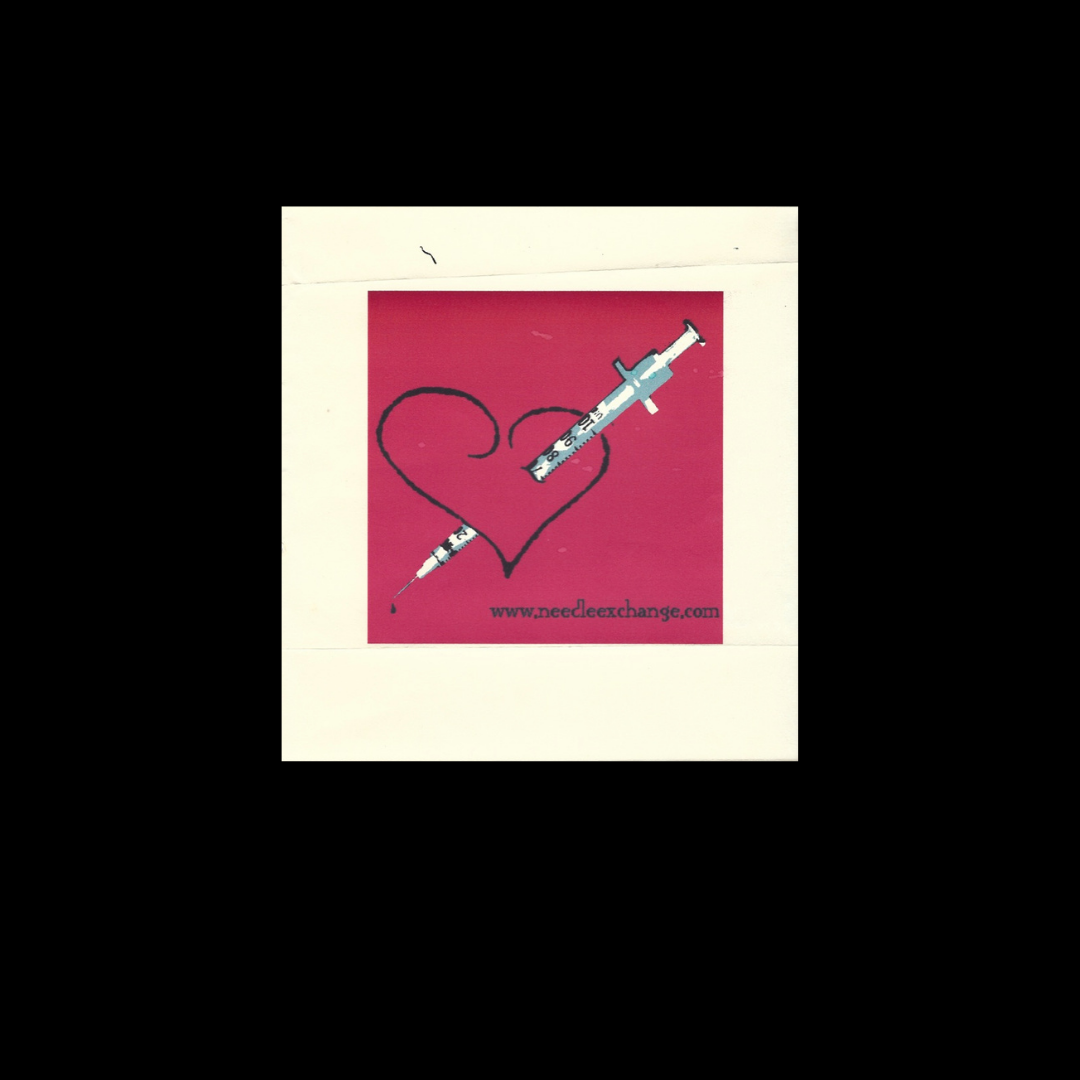
All images here were created by users for users through the Santa Cruz Needle Exchange Program from 1989-2002.